Monday, February 20, 2017

New Camera Week - Olympus


One of the splendid perks of being a weblog writer is that you get the chance to try out new photographic equipment in your own time. It is altogether a different experience from that of reading Internet advertising or just hefting the gear in the retail shop. As a writer, however, you have to have something to say when you start typing - and the only way you can say it with authority is if you are going to do something with the gear that you know how to do.

This last weekend I got to test-drive the new Olympus OM-D E-M1 MkII camera with a variety of lenses - and the Olympus company were kind enough to match the optics to the tasks I normally do. It gave me a chance to exercise the camera in the studio and out covering a long distance subject. Every equipment test is, inevitably, a comparison with other systems  - so it is as well to subject the test gear to the same experiences as the normal rig.

As the Olympus representative pointed out, however, and as I have certainly discovered, there can be a world of difference in the ways the manufacturers ask you what you want to do ( menu communication ) and accept your instructions ( control operation ). We have to second guess how the engineers wish to refer to a function. If we're lucky we know what we want to do, but the question of how may arise.


The OM-D E-M1 MkII is new on the scene and there are good stocks available - it is a camera - not a phantom. You can march in, pay up, and march out with one. While you are at it march out with a pro lens.

When you do, you'll note that the original premise of the mirror-less cameras - small, light, simplified - has been somewhat set aside. This thing is solid and weighty. So are the optics, particularly  the pro-glass models of the Zuiko lenses. The ergonomics are good as the hand grip is deep enough to provide good finger clearance and the placement of the finger and thumb wheel as well as the shutter release are perfect. The on/off switch is somewhat disconcerting until you remember that Olympus used to put the thing on the left top plate under the rewind crank. No crank these days, but the switch is over there.


As with many Olympus offerings, there are multiple function buttons scattered over the control panels, and there are multiple ways to actuate the controls. Bless them, they have included two of these buttons right where we most espect them - under the fingers at the right-hand side of the lens mount. You can progam one of them as a depth of field preview like we did in the old film days.

 I switched off the touch-screen apparatus as I find it disconcerting - others love this facility. In my case I accessed the most-needed controls by pressing the menu and getting what is essentially an extended " Q " display on the LCD screen. Had I not had some coaching from Burke, the Olympus representative, I don't think I would have found half of the controls.

This week's experiments were conducted entirely in the JPEG mode - my processing programs will not decode RAW files on something as new as this camera. No matter -  the programs I wanted to try all responded in this mode and with a bit of enlargement I was able to do clear comparisons on the computer. But one thing I would like to mention at the start is the facility that Olympus put in this camera ( and in their Pen F ) for in-camera processing of images. This will give the sort of results that you might produce in an editing program on your main computer. Were you out on the road without access to a computer, you could still edit quite a lot with the camera as you shoot.

Note that the camera came from Burke with a 70% charge and shot all afternoon in the studio - with a number of electricity - hungry programs and screens in use all the time - and still had 22% left at quitting time. I found out why when I brought it home and opened it up the do the charging.


The battery is huge! I've seen smaller trays of lasagna...There should be enough capacity there for any reasonable shoot. As a way of measuring the size, that's a plastic dinosaur - and the battery is bigger. It holds 1720 mAh.

So tomorrow we start in the studio...

Labels: , , , , , , ,

Monday, February 6, 2017

Gimmee One'a Dem - Part One - The Maaaaaate in the Business


I like to think that the people who read this weblog column are astute professionals and keen amateurs. Enthusiasts in art and science - renaissance men and women who can turn their minds and hands to any task. Experts, in short.

Unfortunately, the readers will also be seen as experts by some of their friends who are not as well versed in photography. They may be seen as a resource to be exploited when it comes time to choose a camera. Sort of a walking CHOICE magazine. Someone who can do the hard yards of thinking and make sure that their mate gets something fabulously good for hardly any money at all.

Maaaaaate....

It's not as much fun as you might think. You may indeed be an iconic international superstar ambassador with a string of awards stapled to your CV, but if you put your mate onto a piece of equipment that becomes a disappointment, your name moves from Mentor to Mud. Here's a series this week that will help you maintain your standing in the studio and the saloon bar.

Firstly, be realistic. Is the mate asking you for good advice or bad advice?  That's not as enigmatic as you might think. Some people want you to tell them what to buy because they want to use the goods. Some want advice because they just want to spend money - and will never make pictures. Some just ask to trap you into an argument. You can succeed with the first, and have a good time. The latter two classes of mate will just cause grief.

Secondly, be realistic again - but this time assess whether your mate has the intelligence to succeed with a digital camera. Be as cynical as you please, but keep the answer to yourself. If you send someone out to operate the NIMITZ and they are really only suited to a ten-foot tinnie and a pair of oars, no-one is going to be happy. It's true to say that you never can tell - some people have blossomed into technical geniuses when confronted with the control panel of a modern DSLR, but it is always good to leave a chance open to an automatic escape. Remember that Kodak got rich with the Instamatic camera and poor with the digital...

Thirdly, be fair. You are not the press agent for the camera shop ( I am! ). You are not the shop's management nor the accountant. You are not authorised to offer your mate a great deal on something the shop sells unless you actually own the place...and it is unfair on your part to drag someone in through the front door on the inference that you have the power to compel the owner to discount goods. When it comes to money you cannot be a mate in more than one direction at a time.

You might have wondered about the first part of the title - well, for the purposes of the next few articles, we are going to imagine that your mate is one of the people with little experience of photography...but that they have a need for a " good camera " and enough money to purchase it. We are going to further assume that they have a family, hobby interests, and are going to travel. And that they want you to recommend a surefire winner of a camera kit for them so that they can go to the holiday island/city/mountain top/fiord and bring back winner shots.

We're not going to assume that they read instruction books or internet sites before they buy or use the camera. I mean, why would they? They've got you...

Maaaaaate...

Labels: , , , , , , , , , ,

Friday, January 20, 2017

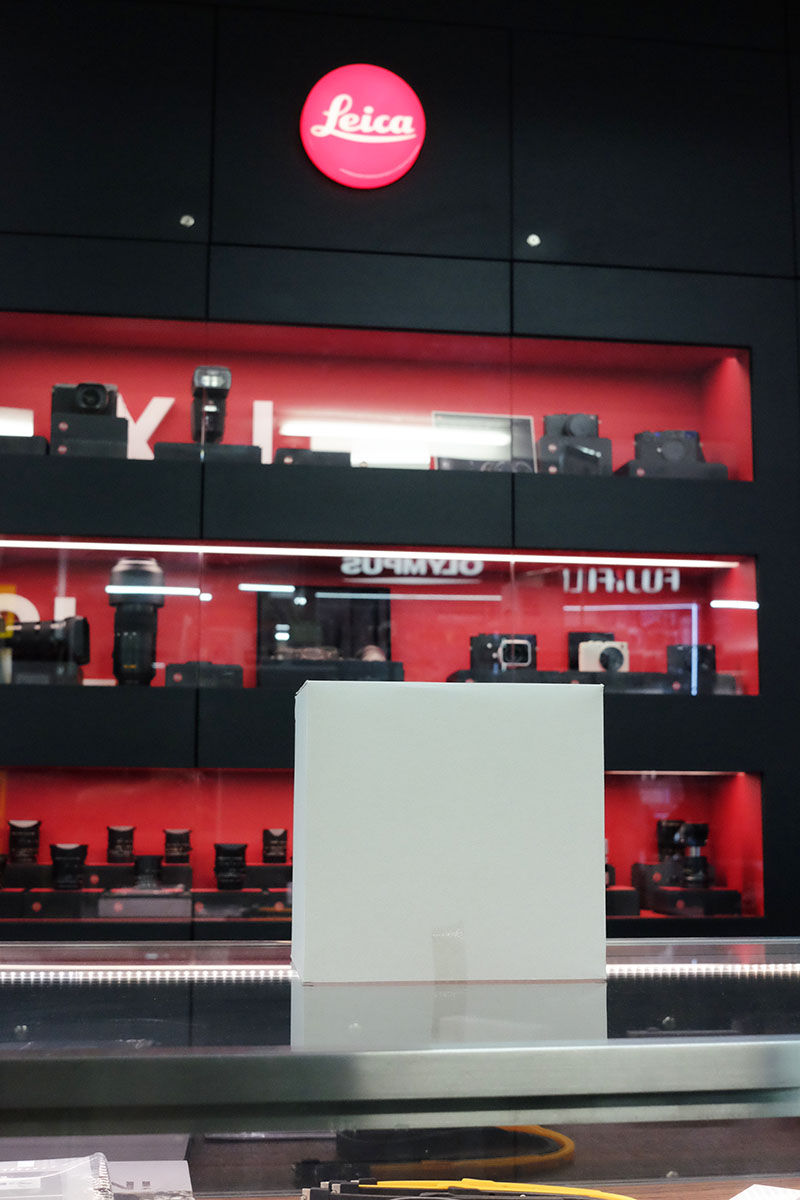
Touched By Human Hands - The New Leica M10


We are not immune from the magic down here at Camera Electronic - we get just as much of a thrill with the unboxing of a fresh product as you, the customers, do. When the product is absolutely new,  is the latest offering from and industry leader,  and has just arrived by special delivery it is an especial moment.

Today the product was the new Leica M 10 camera body. The chap tasked with opening it and putting it on display was one of our chiefs - Saul Frank. And the occasion was literally less than a half hour after it had been delivered.


The specifications are on Leica's website. They are on our website. They are long and illustrious, but there are a few main points that we could tell just from looking at the camera:

a. It is slimmer than heretofore in the Leica M Digital range - about 3-4mm difference. The body shape is much more reminiscent of the M-series Leica 35mm film cameras.


b. There is an external ISO adjustment dial that has been positioned in the same place that used to hold a rewind crank. It is a locked dial - to free it for adjustment you pull it up against a detent. Note the red ring to tell you it is in the variable position. When you're done, snap it back down..


c. The battery is slimmer - says Saul.


d. The strap included in the kit is proper full leather. Leica logo impressed into it and all...


e. The LCD screen is way bigger than the previous M-series screens. The viewfinder eyepiece is larger.


f. Leica have continued the characteristic ID mark on one edge of the hot shoe.


The internal improvements in resolution and processing are all in the official spec. pages. Pore over them daily, but do make some time to come in and see the new body in the shop. The one that you see here is for display only for the next 3 months but more salable stock will be arriving next month.

You'd be wise to email or phone some money in now - $ 500 secures a pre-order against a body price of $ 9700. There will be others wanting it as well, so be snappy.

There will also be an after-hours Leica introduction party here at 230 Stirling Street on the 8th of February - a Wednesday evening from 6:00 to 8:00. Go to our Facebook page and look it up, or if you are on our regular email list, be sure to check it over for details.


Note: Saul's hands were clean and careful. The Leica M10 is in perfect shape. And it is a perfect shape.


Labels: , , , , ,

Wednesday, January 11, 2017

Planning Ahead For Your New Camera Outfit - A Checklist


Those of you who followed the news from Photokina in 2016 - sent back in part by the management team of Camera Electronic and in part by the press departments of major manufacturers - will have been attracted to the new cameras and lenses shown. Lots of you will have zeroed in on new offerings and are starting to make vague plans to get something fresh...

Well, before the new cameras came onto the sales floor - in some cases this can be months - you could do some good for yourself by making a detailed plan of what to get...in what order. We've prepared a checklist for you. Please feel free to copy it and print it out.

TEN-POINT CHECKLIST FOR NEW PHOTO EQUIPMENT

1. Sell your old camera at the markets, pawnshop, or Gumtree. Hide the cash from the rest of the family. Do this first so that you cannot renege on the idea later. You can occupy your spare time by cleaning out the hard drive and finally editing those 5000 files of the dog chasing a tennis ball.

2. Decide which lenses you wish to keep. This list should also include the lenses that you bought at the camera market, the lenses that have been sitting in the shed for two decades, the lenses that fit the camera system you had two camera systems ago, the lens that your mate gave you, and the lens that you haven't actually told the wife about yet. If none of these match the new camera system you are lusting after...err.. considering...then you are morally justified in selling the lot. Morals play a lot in lens sales.

3. Lift up the bottom of the camera bag or Pelican case and see if anything has slipped down there. It is the photographic equivalent of taking the sofa cushions off and looking for small change but it can yield some surprising finds. Expect old filters and lint.

4. Analyse your photo patterns scientifically. If you have been taking pictures of orchids for 30 years, you probably will not need to invest in a 500mm f:1.8 lens. You can apply the money you save to the purchase of a 78-Kilo tripod and a focus stacking program.

5. Measure the boot of the car. Is it big enough to accommodate the new camera system? Is it big enough to fit all the boxes in if you have to store them in there to prevent the wife from finding them? If she does find them, is it big enough to accommodate you?

6. Check the specifications of your computer system. Does it have enough central memory to run the files from the new camera? If it does, will it overheat? If it overheats, can you make cheese toasties on the outer casing? Note: with some examples of computer from a very well-known manufacture, you can. Kraft Cheddar slices are particularly good for this.

7. While you are puzzling at the figures on the computer, look up the version of RAW converter that the new camera will require - and then look at what your current editing program will do. Of course it will not be adequate, but I just put this in to make you feel sad and alone. A new editing program will bring you joy again, until the next time you change systems...

8. No need the throw out all your old memory cards - they can be used to prop up small flower pots to promote drainage. The new ones that you will need to buy will be faster and have more capacity. You can always ask whether the new camera comes with a free card in the box, if you are not worried by indelicate language.

9. Will you want black or silver? Or silver with tan facings? Or an overall wrap of the national flag?
Or all four? If you sold the car you could buy all four. You can sell cars on Gumtree...

10. Do you need the new camera to be water-proof, water-resistant, or highly-absorbent? Decide now before you go down to the beach.

Labels: , , , , , , , , , , , , , , , ,

Monday, September 26, 2016

Get A Grip Week - Day Five - The Good, The Bad, And The Unusual


Here's three grips - one which we sell, one which we don't sell, and one which no-one even makes...yet.

Grip One - The Nikon MB-D16 is the dedicated grip for the Nikon D750. In case that makes you scratch your heads, there is also an MB-D17 for the Nikon D500 and an MB-D12 for the Nikon D800, D810, D810A and D800E. Nikon have made a lot of these add-on packs for their high-end enthusiast and pro camera. They're all about the same idea - just get the right number.


The grip is big, but not too heavy. it has controls for vertical shooting, space for a second EN-EL15 rechargeable batterie, and can also take an accessory tray to use up standard AA cells. For the nervous types one of these trays is good insurance against forgeting to charge your batteries overnight. Instead, you can forget to buy AA batteries - your camera still won't run but for a different reason...


I can attest to the convenience and utility of Nikon grips if you are doing a lot of wedding or portrait work. The easier position for your right hand means that you can shoot longer and with better control than arching your wrist over for hours. Definitely a must-buy if you're working.

Grip Two  - the internet iShoot casting. This fits onto a Fujifilm X-100 body - and you can get similar castings for other brands. It's an eBay purchase made just on speculation.


There's no leatherette covering to the grip handle and it is not as secure a grab for me as the dedicated Fujifilm. I find my fingers still curl over the top of it rather than securely enfolding it, but at least it is a sort of a grip.

Where it succeeds is the incorporation of Arca-Swiss rails on the bottom and the left side. The bottom one is self explanatory, but the side one is very useful for studio stand mounting on a three-way head - you needn't tilt the head 90º to go for a magazine orientation. It means that if you need both horizontal and vertical versions you can just slide the camera out of the A-S block and slide it in on the other rail. Saves a great deal of time and imaginative language. If the camera was dedicated to the studio I would unbolt the grip portion and chuck it away.


I also make use of that side rail to mount an old Metz flash on an A-S quick release plate for a big old flash/handle setup. If you use an external battery pack and a Metz hammerhead you can get extremely quick recycling time. 

The downside of the casting is the weight - it is more than the others - and the slippery nature of the finish.

Grip Three - The Left-Handed Olympus Flabbergaster.

I wonder if Japan has the same percentage of left-handed people as the rest of the world...apparently about 10-12%. If it does, do they find using cameras designed for right-handed people a pain? 

Of course they can adapt...they have to when they are shooting matchlock muskets at each other or they would get flash burns all the time. And some are ambidextrous anyway. But wouldn't it be nice to make a digital camera just for the lefties and soak up ALL of their business? The population of Japan is 127, 000, 000 people so 10% is 1, 270, 000 and if you sold a camera and an accessory to half of them you could buy an awful lot of saki and octopus balls...

Righto. Most cameras are right handed - except for ancient Alpas and Exaktas - and most cannot be mechanically or electronically adapted to operate left-handed. But the ones that have a firing control in the base of the camera - one that takes a switch command from an accessory grip - like the Olympus OM-D E-M5 series...

Well, you just design a lefthanded grip that screws into the bottom of the camera, ring up the advertising department, and start making room in the basement for the sacks of money. It is a no-brainer when you are just providing an electric signal with a switch.


C'mon Olympus. Make us proud.


Labels: , , , , ,

Friday, June 24, 2016

New class of camera


June has seen the announcement of a new class of camera - the medium-format mirrorless model. Fittingly, Hasselblad have been the first in the field with it. It will have a new range of lenses and a new set of tasks to do. The owners may find themselves taking it further away from the environment that the other Hasselblad digital cameras normally occupy.

Mind you, sometimes the current Hasselblad digital cameras are flying through the air or swimming under the water, so that must count as venturesome. And then there were the Hasselblad film cameras that NASA used to take moon pictures...close up... and that was a fair ways outside the studio...

But how about back inside the studio? The slim line of the bodywork on the new camera is more than just a convenient shape - it is suggestive of the sort of thing that may come. And I am thinking specifically of the size and shape of a dedicated studio camera with view camera movements.

Hasselblad may not have this on their minds at all. But it is not to say others don't - readers with an interest in the studio camera will remember that Fujifilm made a series of 6 x 8 studio cameras in the last of the film era that incorporated bellows and rise, fall, and tilt movements. All this while making room for a reflex mirror. I can attest to them being a very well-built device - I was tempted in the old Melbourne Camera Exchange days to invest in a kit, and I do regret not trying one out in the studio.

Ah. well, that was film and this is digital....and by the looks of the bodywork on the new Hasselblad it is slim enough to contemplate being part of a back standard in a view system. With an integral sensor and LCD on either side of the body, and provision for movement of a lesson the front standard, we have a digital version of that 6 x 8.

I wonder if this can have exercised the design minds at Fujifilm? Rumour has it that they will also make a medium format mirror-less digital in the future. Would they see the professional illustration market as a viable niche to enter? I can only hope.

See the Hasselblad X1D on the Camera Electronic site here

Labels: , , , , , , , ,

Wednesday, June 22, 2016

Sofa Time


Down the back of the sofa.

In the car ashtray.

All the pockets of your trousers in the wardrobe.

The suitcase you brought back from Bali.

Biscuit tin.

Old glass jar in the shed.

Wherever there might be some spare change - start looking for it. You're gonna need about $ 16,000 if my calculations are correct.

If you can't manage this in the next three months, wait about 6 months and you might make do with  about $ 10,000.

Okay - go. Get started.

PS: do the children need to eat every day? I mean, really?

Labels: , , , ,

Tuesday, May 31, 2016

The Downside Of The Touch Screen


People love touch screens - whether they are on tablets, smart phones, or camera LCD screens, the public cannot seem to get enough of them. They poke, tap, swipe, scroll and twirl all day. The images open, close, expand, contract, and disappear forever.

I very nearly hate the touch screen.

When I use it on my iPad it gives me none of the tactile feedback that the standard keyboard does. Each stroke I make as I write this tells me that the wireless keyboard has registered my entry by a small sink and tap feedback. Even if I am not looking at the screen as I type...and I frequently am not...I know something will be up there when I do. In the case of the iPad I have to watch each stroke on the screen to make sure it actually happened. Note that in neither case can I guarantee that the word will be correctly spelled - that's a separate process of proofreading later.

When I tackle a phone with a touch screen it is worse, because the phone has smaller dots on the screen representing the qwerty keyboard. The dots are smaller but my fingers are the same size. The spelling worsens.

On the back of a camera the LCD touch screen might be thought a great advantage. If it has usable icons, perhaps. If it has symbols that need to be translated by a Swiss psychologist I am in trouble - I would do far better with a dial or a menu.

The really annoying thing is when the slightest touch of finger or nose on that screen triggers it off. You get to be very wary of it when it continuously shoots before you are lined up.

But I must not be too negative...after all this is digital, not film...the touch screen on a swivelling LCD is an elegant thing in a studio. The camera is frequently mounted on a tripod or camera stand and the user has both hands free. The screen may be tilted up to save the photographers's back from being tilted down. if the camera has provision for touch screen focusing the lens need not be disturbed - the careful alignment of a scientific or advertising shot cannot be thrown off at the last moment.

If the manufacturer allows the camera to be controlled remotely from a tablet with the same touching, the whole exercise becomes fun. You still set it off inadvertently but you feel that you are being a techno-geek while you are doing it.

Labels: , , , , , , , , ,

Tuesday, May 24, 2016

The Big Camera For The Big Picture


Well, I saw it.


There it was in the Fridays Studio last night - Monday as it happened - the new Hasselblad H6D camera in both 50 megapixel and 100 megapixel versions. And a table of Hasselblad lenses that fit onto the camera. Also a setup with a computer, projector, and two professional strobe lights with soft boxes. All it needed was a very patient young woman as model and a professional fashion photographer to wring the new camera through its paces.


Well, he'd actually had a chance to have a go before the evening's presentation with some fashion shooting and was able to shows some of the results - large prints on the walls of the studio with amazing sharpens in the details. As the 100 megapixel camera is the industry leader at present for this sort of resolution, we had the privilege of seeing the cutting edge without getting hurt.


This new evocation of the Hasselblad HD system has added any number of conveniences and improvements - an improved range of ISO settings, 4K video, dual card slots, increased dynamic range ( 15 stops!), and a thoroughly better LCD screen with touch control.

Things is faster with USB 3.0 throughout and they have even taken to such of the fashionable modern improvements as the Q button - you get 8 vital functions displayed on that LCD screen at once.


One of the Camera Electronic staff questioned me about the size of the sensors - it turns out that the 50 megapixel model runs to a 33mm x 44mm sensor while the 100 megapixel variety has a sensor that is 40 mm x 54 mm. This is quite reminiscent of the 645 sized sensors of the film era A16 backs.

The new lenses for this class of camera have also been updated to include a faster 1/2000 second shutter speed and the flash shooters will be delighted to see that the X - synch speed can go all the way up to that top speed. Daytime flash fill could not be easier.


The photo demonstration, with the patient young lady, went well, as the ability to dial down the overexposures using the dynamic range was amply demonstrated. The camera is best suited to Phocus software...in this case the 3.0 version...though output can be sent to any number of other formats. Even rather harsh direct flash could not phase the system, and the obvious speed of the camera in processing the RAW files enabled the fashion shoot to flow very swiftly. Apparently the new tethered cable has a great deal to do with this - the simple fact of being more flexible and better connected makes a workflow difference. There is probably a fair bit of wireless capability there as well since they spoke of sending images to iPads while studio shooting is going on.


I think the high speed capture of the device is also at the top of the market, if a video that was shown is anything to go by. I was rather distracted by the photographer's use of cans of paint thrown in the air to make patterns of colour...spectacular, and possibly artistic, but probably the messiest use of a studio I have ever seen.

Let's hope the Fridays Studio never has to undergo that sort of cleanup...

Labels: , , , , , , ,

Friday, April 22, 2016

Another Two Stations Heard From


Yesterday's column hinted that there will be some delay for a major camera manufacturer in the delivery of promised cameras because of the recent series of earthquakes in Japan. Today I see their largest rival clocked in with a similar press release - but in this case reassuring us that they were good for stocks for the next two or three months.

Not so good for some of the component subcontractors who were in the shake area - they are assessing what impact this will have on the overall supply situation this year. One of the major component manufacturers has suspended production of sensors at a plant that was within the affected prefecture. And they make sensors for a lot of people...

Again, and this is from someone who is always buying things, the best advice is to get your wallet out and purchase now, while stocks are in the shop. An this isn't just earthquakes in Japan - this is also life in Perth.

Perth has a peculiar set of retail circumstances that may not be repeated anywhere else in the world ( I believe the closest retail model that matches Perth is Churchill, Manitoba in polar bear season. That and the stage play " Sweeney Todd "...). We need to recognise this and act accordingly.

We are at the end of the world - or at least at the end of the retail world - just before it resets itself and starts up again half-way across the Indian Ocean. Things arrive here when they arrive - like standard gauge railways and winter fashions. They stay on sale for as long as they stay - sometimes for decades and sometimes for minutes.

You cannot see an item for sale one week and tell yourself that you'll come and get it in a fortnight. Perth does not work that way. If you come back in a fortnight it is frequently gone and the sales staff will tell you that there will never be another one. Sometimes this is because no-one can re-order something that has sat there since the Menzies era, and sometimes it is because the manufacturer has broken up the moulds and tools and is off on another tangent. The basic message is the same; when you see something you want or need, get it RIGHT AWAY. Good or bad, it may be the only chance you ever get.*

Sitting on your money is all very well if you want flat money - because that is what you frequently get. Also flat images and a flat life. Spending a little to get into the modern photographic game can pay off handsomely, and I would recommend to to all the readers. I shall be doing so myself and expect to get an increased low-light capability. You can too.

* This applies to book shops particularly. Lose an opportunity and it is lost forever.


Labels: , , , , , , , , , , , ,

Tuesday, April 19, 2016

Talk To The Hand


If you are worried about people who give you funny looks - or throw things at you in train stations - then this column is not for you. We acknowledge your sensitivities and will not compel you to put yourself in the public firing line. The rest can crowd around and settle down.

The days of writing down your exposure details for each test shot you do have gone. No more scraps of paper or grubby notebooks. No more stubs of pencils. You can reserve these for writing down locomotive numbers - the digital age has put all the data you will ever need right there in each file you create. And there are any number of editing programs that will show it to you on demand, together with international conventions for copyrights, naming of files, technical details, and hot dates. It is an age of information overload and you are expected to shoulder your share of the burden.

But there are any number of things that the camera does not record...and that you may really wish to know later. Things that you would be wise to note down as they occur. Things like atmospheric conditions, location information, details about who is in the picture, or what kind of car it is. What you had for lunch and the waitress's telephone number. You need a personal assistant to do this - or you can personally assist yourself. ( Heaven helps those who help themselves, and particularly at a smorgasbord when they bring out the fresh prawns...)

So. Try one of these for size. Olympus personal recorder. Size of an old mobile phone or a cheap dollar candy bar. Records over 800 hours on a 2 GB micro SD card. You talk discretely into it and then play the thing back to yourself later to get the information. Heck, you can sing to yourself in a Charles Aznavour accent if you want to and listen late into the night. You'll get a seat to yourself on the late night train, I can tell you...

Or turn the thing on in a Uni lecture and doze - play it back later and make notes. Send it to an 8:00 in the morning lecture or staff meeting and let it listen for you. Beware; when the lecturer or team leader looks up and sees only one person in the room, frantically pushing the "record" button on 15 of these suckers while smiling nervously, you'll know you are in for trouble.

In short, it is a portable memory that can go with you everywhere. If you are going to engage in nefarious doings, do them quietly, as this Olympus recorder is quite sensitive to the surroundings. It may be just the thing you need to prove to someone that they really did say what you say they said. Olympus will not get you out of a fight but they will give you the evidence to sustain one.

Speak into the hand, please.

Now, Camera Electronic has come across a number of these dangerous devices and would like to sell you one at a bargain price. Come ask the sales staff and they'll go upstairs and bring down a selection. Go on. You'll either get yourself a very useful adjunct to daily life or a packet of trouble beyond your control, and either way it will be interesting.

Labels: , , , ,

Friday, April 8, 2016

The Swedish Undra Maskin


Well, start going to the gym. Do your curls and upper arm exercises. Practise lifting heavy weights. Because the Swedish heavyweight is back.

Not Ingmar Johanssen - or Ingmar Bergman - or even Ingrid Bergman - we mean Hasselblad and the new H6D. The bigger medium format digital camera.

A new electronic email ( as opposed to the old steam ones ) went out today alerting Camera Electronic customers to the appearance on the world scene of this new camera. The press release for it is the only thing seen at present but it promises some pretty interesting things:

a. A bigger, more divided sensor. 100 megapixels to capture things. 40mm x 53mm sensor size. This is a considerable advance over the previous size and a jump ahead of their competitors. looks as though they are doing a 100C and a 50C version.

b. 4K video capture.

c. A new processor inside.

d. Raised ISO  - up to 12,800 now.

e. USB 3.0 connections.

f. Dual cards - CFast and SD.

g. The .3FR.JPG format. No, I don't know what they mean either, but it's their press release...

h. WiFi connectivity.

i. 15-stop dynamic range.

j. A touchscreen LCD and new display.

K. An orange shutter button.

I've included the last feature because it is the only bit that I can afford - no notes yet on the Australian price but I've googled up the New York price and fed it into the currency converter program and I privately suspect that you would not get any change from a $ 45,000 note on this camera. Not surprising seeing the specs and the heritage of the device, but I suspect that it will be government money or high-end advertising studio money that buys it.

Mind, you, one Powerball and I will be down at the CE front counter pestering the staff...*

*Actually, I pester them plenty, but an order for a complete new Hasselblad H6D outfit plus extra lenses and a spare pair of trousers would raise the game to the second floor.


Labels: , , , , , , , ,

Monday, December 7, 2015

Lighter Leica - M Lite?


I asked my colleagues this week to tell me things that I could turn into columns for this weblog. I don't think that I can necessarily use " Go Away " and " Stop Pestering Me " as inspirational material but I did come away with the thought that we should talk about the racing Leica. The stripped-down version. The PRU model that zips over the target, takes a picture, and is gone in a flash. Not seen, not heard.

Note for the newbies. PRU means Photo Reconnaissance Unit - the RAF used Spitfires and Mosquitos that had been specially prepared and painted - they went higher, faster, and farther than other fighter planes because they took out the guns and other heavy bits and polished and smoothed the external surfaces - they were painted a peculiar light blue to blend in with the sky. I shouldn't wonder if they didn't fly over Wetzlar at some stage of the game...

Well, Leica AG haven't painted their M-series camera light blue - or waxed the outside, for that matter -  but they have slimmed down the specification, reduced the weight, and quieted the camera body. All to make it one of the most discrete of Leicas. If you are in the business of discretion you may be interested. Discretely...

The next model up in the Leica range - the Typ 240 - has a certain level of shutter noise in single - shot mode. The Typ 262 has less noise.

The Type 240 features video and Live View mode - the Typ 262 eschews these. You just get to take pictures quietly.

The Typ 240 has a marvellous top cover milled from brass and chrome plated in silver or painted in black. The Typ 262 has a marvellous top cover milled from aluminium...less weight.

The Typ 262 concentrates the Leica experience into the essentials without adding complication - the menu is just two screen pages. Compare that to some of the electronic sagas dished out on the back screen of other maker's top cameras. Leica shooters will be pressing the button on the top of the camera a lot more than the buttons on the back - and this is really how it should be.

The end result will be more well-timed images with the Leica trademark of resolution and clarity. Some of them will be possible because it is a Leica and some of them will be possible because it is a quiet, discrete Leica...

Labels: , , , , ,

Monday, November 16, 2015

Okay...It's Monday Morning And You Need A New Camera


And do Leica have news for you!

Last week saw the demonstration night for the Leica SL camera and the new 24-90 f2.8 lens made for it. Two of our management people went to Germany for the big initial launch, three of our senior staff went to Melbourne for the Australian initial launch, and the rest of us just had to wait here in town until the circus pulled in.

There was a bit of speculation in local minds about the size of the camera - based upon the DP review preview pictures. It looked like a very big body in very small hands and the size of the zoom lens was also exceptional. Yet...advertising pictures can be deceiving and we needed to see the thing in hand here before commenting.

 Here's the camera and lens in the hands of normal people ( Not that our staff are not normal, but you know what I mean - the hands are not the hands of professional models.). The initial impression from the picture is only slightly out - the camera is indeed large, but the model's hands in the DP Review pictures are small and the image is deceptive.


The balance of the camera body and lens combo is good - there is indeed enough grip on the RHS to manage the weight of the lens - the smaller 50mm lens that will be coming shortly will further reduce any strain. I daresay a vertical grip will eventually arrive but not for a while.


The grip ergonomics as far as access to the shutter button are fine. No finger strain as with some other mirror-less full-frame cameras. Just as well - the fingers that can afford to sign a cheque for this camera and lens are valuable and expensive appendages and need careful management.


Which brings us to the question of price. While it does have a decided cost, it is less than buying a Morgan sports car or a Holland and Holland Double presentation rifle. Enthusiasts and serious users would do well to speak to Saul regarding the price, and while the camera is slated to be available now in November there may be quite a demand for it amongst the professionals.

Because, kids, Leica has finally made a camera that is not just reaching out for oil, rice, and stockbroker money...it is actually up within the ranks of a producing professional camera - certainly capable of satisfying pro working needs in respect of auto focusing, light sensitivity, low noise, and detailed resolution.

More specs as the week progresses.

Labels: , , , , ,

Friday, August 28, 2015

So Which One Do You Recommend?


Well, with a shop full of things, that's a good question. Which one for what would be a better question and as soon as we start that line of enquiry the thing becomes clearer.

Let us postulate a client with an APS-C sensor camera who wants one lens. Only one lens. Has the body, wants to take pictures, hopes to take good ones.

Lots of the manufacturers of the digital bodies supply short-zoom lenses to start people out - and most times it works well. People get a chance to see the world from a moderate wide angle to a mild telephoto, and can shoot in moderate light levels. The results contain the distortions that zoom lenses are prone to but as these are far less that ever they were, and probably far less that the new user is used to...all is well.

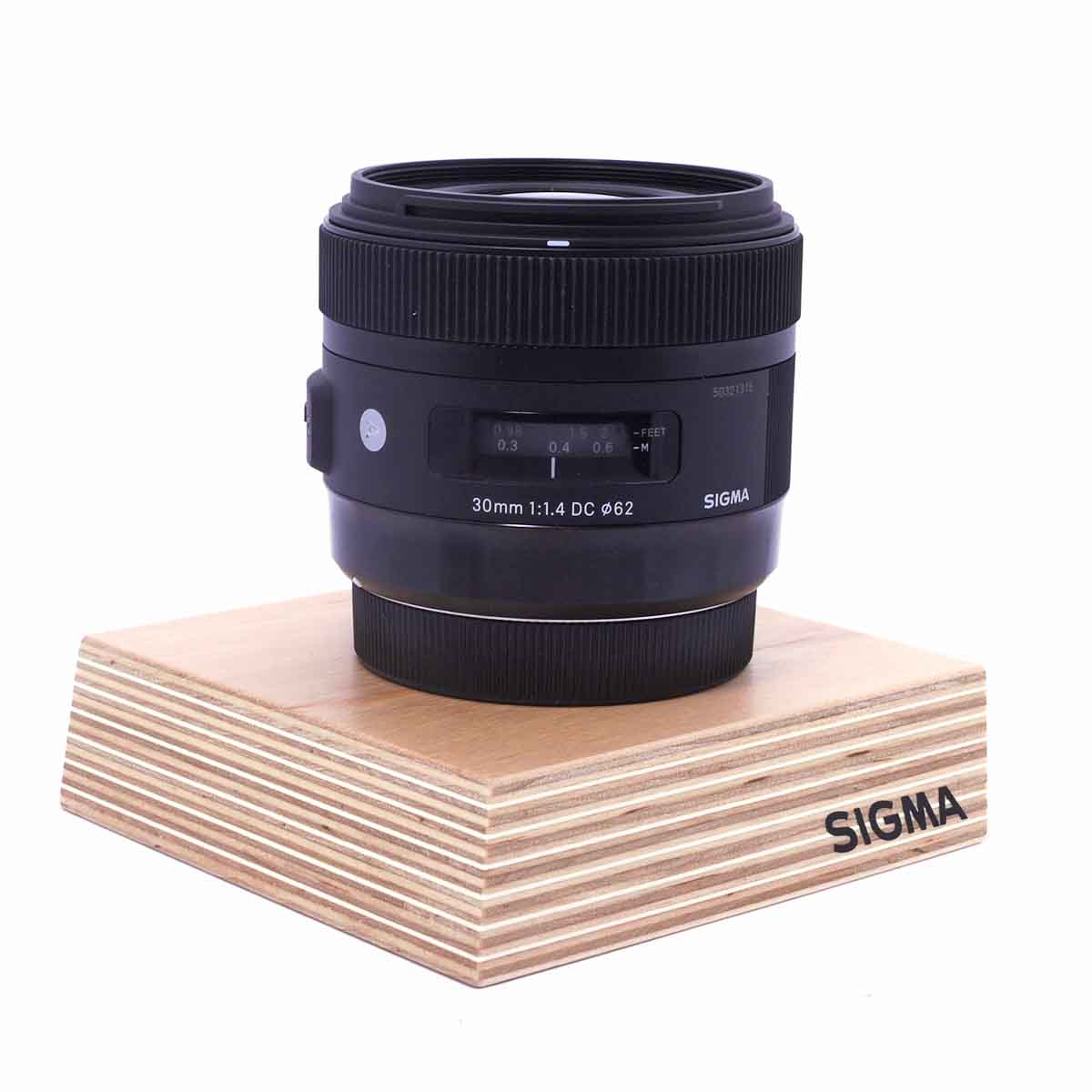
But here is our client with his APS-C body and I want him to have as good a view of the world as possible. In this case I would screw my courage to the sticking point and reach for the.........Sigma Art series lenses. Specifically the 30mm f:1.4 DC - for a number of reasons:

1. Prime lens. Minimal barrel or pincushion distortion. Minimal chromatic aberration.

2. 30mm translates  to the same angle of view of a 45mm lens on a full-frame camera. Very close to the classic 'standard ' length lens.

3. f;1.4 means low-light capability and soft focus in the background when desired.

4. Built like an artillery shell - very good barrel construction. Long-lasting lens.

5. Two-year warranty with a reliable firm.

6. Made in Japan by a dedicated factory.

Equipped with this, a couple of filters, and a memory card, the client can go out and take pictures that will be sharp, well exposed, and colourful. Encouraged by this, they can come back and buy more Sigma lenses with different capabilities......but they need to start out well.

They also probably need to put down their iPhone and stop looking at other people's opinions on web sites - and go out to take their own pictures.


Labels: , , , ,

Tuesday, July 28, 2015

Walking Away With Warwick And Fujifilm


Thank Heaven for sunny Sundays. If the rest of the week is all rain and earthquakes at least we can do something fun on Sunday to refresh the soul.

Last Sunday saw a Photo Walk sponsored by Fujifilm Australia and Camera Electronic that started at the Shoot Photography workshops next door. We were entertained and educated by Warwick Williams from The Fujifilm trainin g team - he's a worldwide ambassador for the firm.

As you can imagine. with all their expertise in television lenses  - the pictures you see every night are likely to have passed through a Fujinon lens - the photos seen in the video presentation were perfect. It was also made perfectly clear that Fujifilm can do everything with the APS-C sensor size that can be done. Those of us who use them new that already but we didn't know why - that's why these training sessions are so valuable.

Well, the visitors went out with Fujifilm cameras in their hands to tour the local streets and to try to find beauty and drama in the surrounding gutters and gardens. Fortunately for the ones carrying the longer lenses and the new X-T10 with the new focusing mechanism, there was a football game being played in the park opposite the pub. They got to stop action and catch colour while the rest of us did art.

If you get a chance to go on a photo walk with Fujifilm ( or other fine manufacturers...) take it. If the day is sunny you get photos and if it is not there is always the pub.


Labels: , , , , ,

Friday, July 17, 2015

Red is The Colour Of My True Love's Heart - Panasonic


No reason for this post, except...

Look at the glorious colour of the body on this Panasonic TZ70.


No need to be dull when you photograph bright subjects.

Labels: , , ,

Monday, May 25, 2015

The Subtle Difference Between Lenses...gravy or mustard?


I used to think that there were major differences between lenses of different makers and that I could get widely-different results by choosing the correct one. And that this would then colour which camera system that I should choose for a particular purpose.

Oh, the hours I agonised over whether to choose Miranda over Exakta or if the Petri was up to the quality of the Topcon...Unfortunately there was no internet at the time so I had to get my misinformation from magazines - fortunately I had limited funds and could not afford too many of these and my level of confusion was moderately low. Nowadays I can bounce from one forum to another - from one manufacturer's website to that of their rival - and pick up enough opinion and angst to boil the water in a large pot.

Note: Time and economics have relieved me of my worries - all four of those manufacturers are cactus. I am also delighted to report that modern optical offerings do not have enough variation between makers to foster such cares.

Oh, there ARE differences. Get out your optical bench and your steam-powered MTF generator and go for your life. You'll find that you can get different numbers for sure. The numbers won't make your pictures look better, but.

You'll be able to differentiate products in each maker's catalog by price ( always a good thing...) and weight. More money and more weight means higher or lower numbers in the laboratory. Again your pictures may be annoyingly similar but at least you have different numbers.

I would also caution those people who are contemplating the purchase of lenses that are very, very expensive against doing the sort of mathematics that sets these prices against that of a Sunday roast dinner and a pint of beer. The results are unsettling - in one case I calculated that an optic was the equivalent of five and a half years of Sunday dinners ...including the pint and, on suitable occasions, Yorkshire Pudding. Strong as my desire might be to take wonderful pictures, my respect for Yorkshire Pudding with gravy is stronger.

Moral? There is none, except the purchasers of modern lenses of the modest sort can comfort themselves that they are getting a very good product and, as far as their characters will permit, can go out and be happy with them.

Uncle Dick

Labels: , , , , , , , , , , , , ,

Monday, May 18, 2015

Singing In The Rain - With The New Fujifilm Lens


Today's big announcement of the Fujifilm X-T10 camera is wonderful. And closely following on is the release of the Fujinon XF90mm f:2 R LM WR lens.

Mouthful, isn't it - all those letters. They're easy to sort out, though:

Fujinon - top quality all the way.

XF - this is a lens that will fit the Fujifilm X-mount - the X-Pro1, X-E1 and X-E2 - the X-T1 and now the new X-T10 all share this mount. It is a remarkably unfussy coupling - no wierd levers and fingers of metal that need to be wound round each other - Fujifilm benefitted by looking at other mounts while designing theirs and avoided the troubles.

90mm - this translates in old film-speak to 137mm - it was a classic medium telephoto focal length that separated you from shy subjects and rendered the perspective pleasing. No big noses on the portraits.

f:2 - WooHoo. Fast! This is a lens that you can use in low light like churches, sports halls, and theatres. The combination of this wide aperture and the 90mm focal length means a restricted depth of field in portraiture and a pleasingly softened foreground and background.

Note that it'll also go as close as 60 cm so you can use that focal length to shoot close-ups of flowers and insects.

LM - Linear motor. Faster focusing - higher torque in the internals and a quicker and more precise response.

WR - here's the rain thing. Not that we advocate getting caught out in it like yesterday...but the WR means that the lens is water resistant. If you're doing sports in winter, it's a thing.

Fujifilm's range of lenses just keeps getting wider...and longer...and better. We'll be sure to let you see a picture of it as soon as we get one in the store - as well as some photos taken with it.


Labels: , , , , , , ,

New News Now In - A Fresh Fujifilm Camera Just Announced


Those of you who follow the Fujifilm bandwagon will be delighted to hear the news - a new camera is announced today!

The shape of the new Fujifilm X-T10 may remind you of the Fujifilm X-T1. No surprise that - it has been developed as a complement to that fine camera. The viewfinder window is in the middle and many of the camera controls on the X-T-10 will be i similar places to the X-T1. But what will be new?

To start with, a new AF system - in addition to the normal 49 single points for focussing there are Zone and Wide.Tracking modes that use 77 focus points. This means that there can be groups of focusing elements on the sensor that can track and predict the movement of a subject and cope well with it - whether it is moving from side to side or to and fro.

You can boost ISO setting to a very high level - 51200 - and still ge strong blacks and low noise.

You can get a very fast view of the world that you are shooting through the viewfinder - the time lag of just .005 seconds means you get a clearly defined picture of the subject and can choose your exposure moment precisely. When you go into vertical mode, the information in the finder slides down to the correct orientation at the bottom of the frame - a great help.

Note: the Sensor is the renowned Fujifilm X-Trans CMOS II sensor and the EXR II processor mean you get the excellent colour rendition that Fujifilm has become renowned for. The new Classic Chrome is in there, as well as as the other Fujifilm simulations and monochrome filtrations. For the adventurous, there are pop effects, partial colours, and a host of other special effects available in-camera.

Fujifilm enthusiasts will also welcome the inclusion of the Lens Modulation Optimiser technology in this camera - it corrects for any residual things such as diffraction - allows you to use the smaller apertures but to still retain sharpness. Very, very nice for the close-up workers.

Note as well that the new Fujifilm App can be downloaded fro your tablet or smart phone for remote control of the camera - I know this works as it is also available for the Fujifilm X-E2 and i have used it with studio down shots. Apparently you can pair it with and Instax SHARE printer for an instant in-hand photo...still to try this myself.

Also still to try will be the video mode - the Fujifilm X-T10 shoots HD movies at 24, 25.30.50 and 60 fps. Apparently many of the sophisticated functions like the focusing, film simulation modes, and scene recognition modes also work with video - those of our readers who understand theses sorts of things can get more information from the Fujifilm site.

I am eagerly awaiting the advent of this new body as I wish to compare it to the X-T1. Sometimes people get the impression that camera manufacturers make Camera A and Camera A Lite...but it really isn't like that. Every new model IS a new model and there will be new features and capabilities.

Styling changes, of course - anyone who remembers the cars of the 1950's remembers that yearly massaging of the sheet metal that caught sales. But below the tail fins and spinner hubcaps there were technical changes galore. same with cameras. I own 4 different Fujifilm cameras and they all have special things that they do. Sometimes setting out on a job is like sitting down to a table set for a formal dinner. Which knife and fork to pick up for which course?*

* Hint: work from the outside in. Do not eat soup with a fork.

Back onto cameras - we'll let you know with an earth-shattering kerboom when the new camera body comes into the store.

Labels: , , , ,

--> Camera Electronic

Camera Electronic