Wednesday, March 15, 2017

Who In Their Right Mind Would...


a. Give their credit card details to an unknown person on the other side of the world for a small camera accessory that they could just as easily buy in Perth?

b. Air-freight a small camera accessory half-way around the world to Perth?

c. Think that they support the conservation of the ecology of the planet while compelling someone to fly a jet aircraft halfway around the world to deliver a small camera accessory?

d. Need a small camera accessory - since the cameras we use have every conceivable function built-in?

e. Stock a small camera accessory that yields about $ 2.00 profit if it sells immediately and $ 20.00 loss if it sits on the shelf for six months?

f. Take pictures that are never again looked at - sitting as they do on hard drives or in computer bodies - with expensive small accessories that have come half-way around the world?

g. Enter pictures taken with small accessories into photo contests that are destined to be seen only by other people who are willing their competitors not to win?

h. Put up photo contests that revert to a fight between users of two different camera systems...and their small accessories from America?

i. Agree to act as a judge at such a contest for the price of a glass of cask wine and some cheese on a stick?

j. Read lists like this?

The answer to these questions is " pretty much everybody I know..." in one way or another.

I have just completed the exercise of pricing up items from international firms for one of my hobbies - building miniature scenes - and then calculating the shipping, postage, handling, and enchilada fees for them. Then I went round to the lady in Myaree who runs Miniature World and bought the little furniture over the counter for less than it would have cost imported. I call that a win - and I suspect that clients of Camera Electronics might be fooling themselves if they indulge in late-night forays with their credit card onto overseas sites. They would do far better to come down to the shop and get the goods in hand right now.

As far as taking pictures and never having them seen, Instagram and Flicker solves that problem, though sometimes the feedback is not quite what we would desire. I'm still debating whether offering images to locally-produced publications is productive or not - so far the only thing it has produced is silence from the editors. This would not bother me so much if it were not for the fact that every time I call round the editorial office they turn off the lights and hide behind the couch. I am starting to get a feeling...

PS: Don't feel bad about reading internet lists. We all do it, and it is forced on us. It is a social media trick they teach in the lectures. At least we are not giving you pictures with dead whales on freight cars...

Labels: , , , , , , , , , , , , ,

Wednesday, February 15, 2017

The Little Black Box In The Corner - Canon CS100


Canon users please draw nigh and give attention. We have a good thing for you.

This blog post looked to be difficult for me - I do not use the Canon system cameras and I am somewhat clumsy with modern file storage and transfers. I trembled at the amount of complexity that I feared would be involved.

Then I read the instructions and looked at a YouTube advertisement. It turns out that what looked like an elephant in the room was the little one from Walt Disney and I need not have feared looking like a Dumbo. This Canon hub is as easy as to use.


Think of it as a 1 Terabyte storage device that you can put files into from Canon cameras or various smartphone devices. It connects to your television to let you store videos or see still files. You fill it up and away you go.

Ideally, the connection to your phones and Canon cameras is wirelessly via WiFi or NFC. They realise that some people have older gear so there are ports in for USB connections and you can feed in standard CF and SD card signals.


You can pump out the electricity to your television, computer, monitor, smart phone, or laptop. You c also command PictBridge printers to make inkjet prints wirelessly. Your production desk will no longer resemble a telephone switchboard in 1932.

As an old darkroom printer I appreciate more and more the streamlined business of digital work, and this sort of easy centralisation can only be good. Thank you, Canon.

Labels: , , , , , , , ,

Thursday, December 8, 2016

The Single Most Important Tripod You Can Own


There's a dramatic statement that will bring a cheer to the lips of the wholesalers - praise indeed for this Manfrotto Befree tripod. They are going to have to be careful when they say the name - it is the MVKBFR-LVE - but it is well worth the attention of the video shooter.

Most of the tripods that have been reviewed in this column are intended for still camera use - from big studio jobs to tiny travel models. They may feature three-way or ball heads but they rarely pan and tilt in a way that would help a video maker. This Manfrotto product is different.


Oh, it has many of the standard Manfrotto features - it folds back upon the centre column to save carrying space and it has four-tube extension legs with lever locks. The leg angles are dictated by swivel levers at the top that allow several angles of splay. There is a hook on the centre column to allow you to put a weight on it to further steady the assembly. So far, so normal.


The part that departs is at the top of the centre column. Manfrotto have included a levelling cup  - it is the part you see in red in the illustration with a locking collar above it. Like the bigger-cousin leveling heads on larger Manfrotto gear, this allows the videographer to set up the legs on ground than may have a pronounced slope and then correct the position of the video head so that it is absolutely level. 


This means that panning action will be level as well and the camera operator will not be fighting the camera as it comes to the end of a long shot. To assure the user that they have indeed corrected the list there is a spirit level on the panning plane.


Okay, you have the tripod set up and the head leveled. The next thing to do is to attach the camera and here Manfrotto have used their standard long video mount with provision for anti-twist pins. The plate slides in from the breech and is locked in with a thumb screw. You should not be able to inadvertently dump you video camera out the breech either - there is a positive lock that must be slid open to allow it to come out.


The control of the camera's movement is dependant upon a long control lever out the back - Manfrotto have realised that different people need different lever angles and have put a user-adjustable arc on the head.


The smoothness of the camera movement is of prime concern - this is damped with a fluid drag head in pan and tilt - you can increase resistance to slow things down.


But we are still left with the dramatic statement there in the header - "most important"...aficionados of other tripod brands might cavil at this. But consider - the most important influence on any video sequence is not the actors or the props - it is the steadiness with which the thing is perceived on the screen. Do what you like with 4K and frame rates and framdamboozle synchronization...if the picture jumps on the screen everyone knows you are a dud.

The most important tripod you can have is the one you carry with you all the time - and USE all the time - and with something as small and sturdy as this Manfrotto, there is no reason you cannot use it for every shot. Then everybody will be ready for their close-up, Mr. DeMille.

****************************************************************************

Camera Electronic's 12 Days of Christmas sale starts today! 12 days of 12 great offers, valid for that day only online and in-store. Today is 30% off selected tripods, including the entire Manfrotto range. See here for all Day 1 deals.  Keep your eye on our e-newsletter, website and Facebook for the 12 days Christmas period!

Labels: , , , , ,

Tuesday, November 15, 2016

Sikorski Never Had It So Good - The New CE Drone Cabinet


Look up. What's that flying by? A bird? A plane? A man dressed in red and blue tights?

No, it's a DJI drone with a camera mounted on it. Someone is making an epic movie and they've decided to incorporate aerial views as well as the ground-based ones. They've gone further than the old trick of mounting a camera on a long boom - or of hanging out off a nearby building's roof. They've got the spectacle of the flying camera.

Well, so has Camera Electronic. We've had the gear in the Stirling Street shop all along and now we're featuring a dedicated drone cabinet in our new Murray Street shop - please see enclosed pictures.


And there's more - that's our own staff member Ricky calibrating the GPS system on a drone out the front of the shop. Don't panic - he's not flying combat missions from 230 Stirling Street. He hasn't attached the propellors or the ordnance to the machine in the picture. Yet. And you will be pleased to know that our Repairs Workshop is getting increased experience with drones as they come into commerical and artistic service in Western Australia.


The new Murray Street Shop - that's near the corner of Murray and Queen Street in the city - has the new cabinet. They've got extended trading hours that let you browse for new equipment later on Fridays, Saturdays, and Sundays. This might be a good time to take stock of your photography and see if a fresh viewpoint - from the air - would boost your sales and fun.

Remember that Shoot Photography Workshops right next door to the 230 Stirling Street shop also run periodic courses and workshops that deal with drone and aerial photography as well as other aspects of videography. Ring to Shoot and see if there is a new world of fun awaiting.

See the DJI range on the Camera Electronic website
The new Camera Electronic city store is now open at 2/324 Murray St, Perth.
For opening hours click here

Labels: , , , , , , ,

Tuesday, October 18, 2016

The Travel Trail - Panasonic Part One - The Silver Style


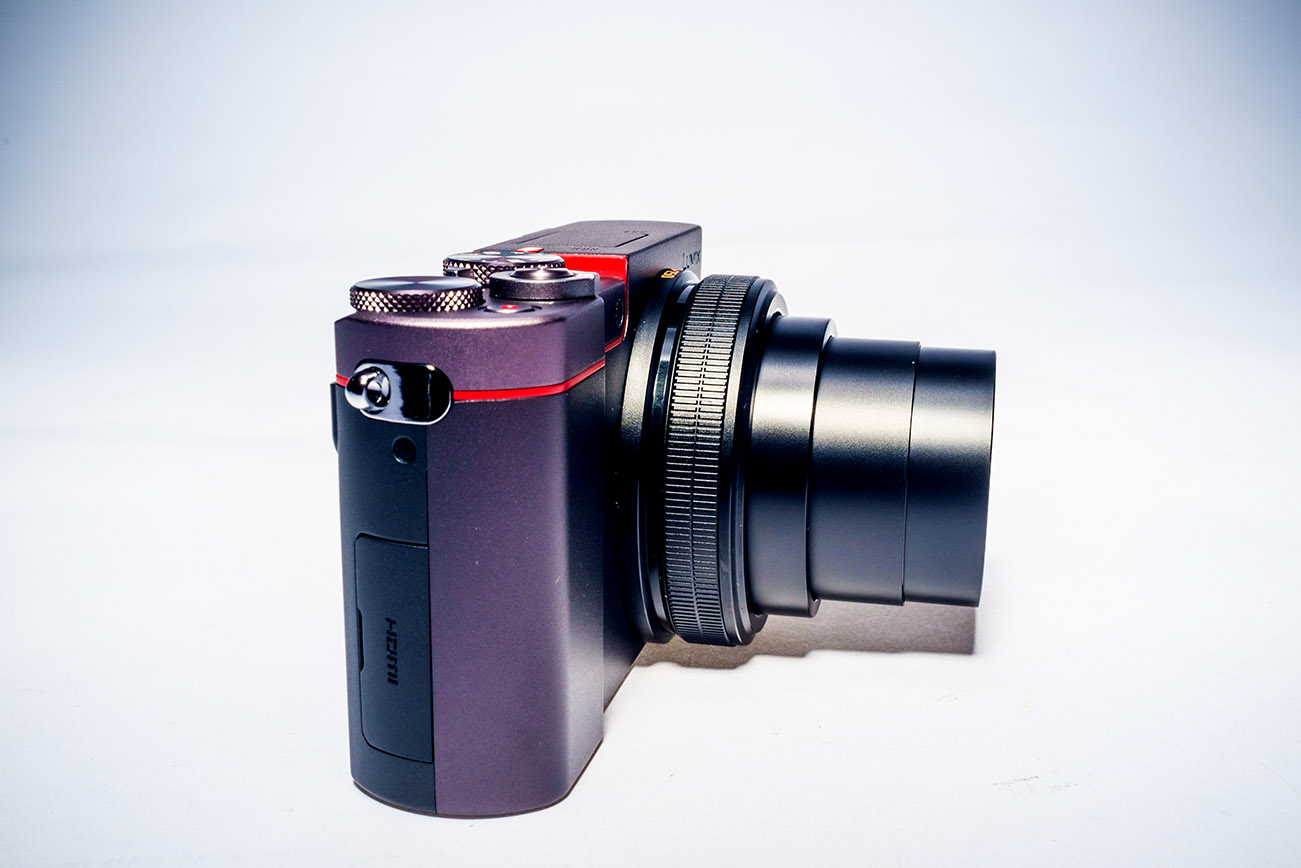
Today's Travel Trail brings us one of the more stylish of the Panasonic compact cameras. Those of you who have an eye to fashion may wish to look closely at the shape and colouration of this...

The Panasonic Lumix DMC TZ110 box says "Silver" but that is a kind of inadequate description for what looks very much like a two-tone titanium finish with a red accent stripe separating the different colours. Of course you can get these cameras in black, but the appearance of this on is so appealing that it rivets the eye instantly. Will we ever get past black boxes completely? No - but this is a good start.


The camera is the type that has a fixed zoom lens and provision for eye-level viewfinder as well as LCD screen viewing. For the tech-conscious it has a 1" sensor and 20.1 megapixels MOS sensor. The lens is a 10 x optical zoom that gives you the angles of view from the classic (35mm film classic) 25mm wide-angle to 250mm telephoto. This instantly identifies this as an overseas travel camera.


Why? Because you need a long lens for Alaskan bears or African lions. And for surf shots closer to home. Of course you can take anything with the telephoto and bring it in closer, but the traveller who wants to do the world circuit with the least encumbrance of gear is the person for this camera.


Now remember that you can also shoot night time, parties, restaurants, family, and an amazing number of Australian travel photos with a smaller camera like this. The fact that you are carrying that much zoom power in pocket or purse means you are never caught wanting when something develops.


On a more serious technical note, the camera shoots 4K video - the current standard of excellence. It is literally a one-button process. The fact that the camera can shoot 4K means that Panasonic have also been able to do something rather magic - they have made arrangements for small bursts of recording that take different focus points during action sequences that let you go back later and select the exact peak of focus. Here's where the sports people faced with a moving object will cry with joy -no more missed shots.


Of course Panasonic have included a number of fun programs in the mode dial - panorama, miniature effect, picture effects, etc. Macro, stabilisation and WiFi are all included. Quite frankly, this camera and a small tablet are all you need for a world trip, and that is two pockets and a space in your luggage for the charger (I pack mine in my spare pair of shoes...), a spare battery, some cards, and a "I don't speak your language" app on the tablet should do it. If you get taken for a rich tourist by the look of the camera you'll have to talk your own way out of it.

PS: That's a no-joke Leica zoom lens made by some serious Panasonic workers. I know- I saw 'em being made.

See the Panasonic Lumix DMC TZ110 on the Camera Electronic website 

Labels: , , , , , , , , ,

Tuesday, September 27, 2016

The Best Of Everything


We have just come down off the Photokina 2016 high and are sitting with our heads in our hands. The  lucky ones who went to see the show have hangovers, sore feet, and credit card statements to deal with. The rest of us have our hopes, fears, desires, and aversions to consider - all fuelled by the internet reports of new equipment. We'll need to keep our wits about us in the coming months.

It is not the fact that there will be new equipment coming that will stress us - new equipment is always entering the market, just as old equipment leaves it - it will be how we feel we must react to it.

Feel? React? What the heck is this? A camera column or a new-age forum? Well, follow along and you'll see what I mean. I'll be honest with you and you should be too...

Photokina 2016 will raise your level of desire. It was meant to do that. No matter what the organisers ever say, all trade shows are there to cause people to want to trade. This is natural and healthy.

Stimulating that desire is done by showing new equipment, processes, or services. If the advertisers who work for the manufacturers are lucky, they catch you just on the cusp of change - when you are about to switch cameras, lenses, flashes, or programs. Then they show you the new gear and away you go. Sale.

If you are not at that launch point they have it a bit harder - they must convince you that the goods that they want to sell are better than the goods you own. In the case of digital equipment, they do this by additional performance or new features. Again, if they can get you up the slope of desire to the tipping point...sale.

The toughest thing that the Signal Corps* ever has to do is rouse the person who is happy with the equipment they already own to some feeling of discontent. Dissing something is a tricky business if you are the same firm that sold the original camera and lens to the photographer...and are now faced with selling a replacement well before the old one wears out. Because - and make no mistake about this - the equipment lasts far longer than they wish your contentment to last.

Ouch.

Well, I told you I was going to tell the truth. Now be truthful to yourself. You really do want the best -everybody does. But the best is ever-changing. It can shift within a particular manufacturer's lineup and it can jump between different makers. It rarely, if ever, settles upon one item from one maker.

It never is the same best for every photographer. One little change in your needs, likes, colour sense, clients, or business model whisks the concept away to another perch. Likewise your training, skill, intelligence, and personality all change the best. And then there is the fiscal elephant in the corner that we never discuss...

So you really should do a bit of self-analysis in the coming weeks as the Photokina reports flesh out. Do not be too hasty to judge, and in particular refrain from pronouncing sentence upon anything until you actually see it. If it is not best for you, don't assume that it is not best for others...and vice versa.

Wait until you have the item to hand to make a decision - by all means review other people's opinions on the net, but remember that the net is the same channel that brings you alien bat children in caves and the break-up of Hollywood marriages...

Make up your own mind.

* Signal Corps = Advertising Department

Labels: , , , , , , , , , , , , , , ,

Saturday, August 27, 2016

New Camera Coming From Big Camera Company!


Is there any more thrilling sound than the trumpets announcing a new camera? We all wake up and look about us, even if we are devotees of a different system.

In this case it is the latest evocation of a full-frame Canon DSLR - it'll be the next in order in the 5D line - the Canon EOS 5D Mk IV.

You may be forgiven for thinking that with the EOS 5D, 5D Mk II, 5D Mk III, 5DS and 5DS R, and now the EOS 5D MkIV that Canon have had more marks than the Spitfire...or Barry Cable...but consider what it means to the working photographer or enthusiast:

1. Any possible teething troubles in the basic body were worked out years ago.

2. Each new evocation has introduced new electronics and new capabilities.

3. The ergonomics were good to start with - they have gotten better. Canon cameras fit everyone's hand.

4. Everything else fits, too. L lenses, transmitters, flashes, accessories---and its you have a fitted case or bag that carried your Canon EOS 5d-series cameras before it'll carry the new one!

5. Everything has gotten better:

30.4 Megapixel CMOS sensor.
100-32,000 ISO boostable to 102.400 ISO.
4k video and flicker free viewing.
Digit 6+ processor.
7FPS and silent single and continuous shooting.
Full iOS and Android WiFi built in.
GPS built in.
Scene Intelligent Auto Mode available as well as standard PASM.
CF and SD-sized slots.
61focus points - dual pixel add system - 1,620,000-dot LCD screen that is touch sensitive.

I can thoroughly endorse the practice of adding another camera to your bag, and choosing one that is the latest of a long line of careful development. I have done so myself, and benefited. You see this in cars, watches, rifles, and many other household appliances - the manufacturer builds upon careful analysis of what has worked rather than blundering wildly out into oddball designs or untried theories - and the wise user can succeed with the gear immediately.

Consider as well the mind of the Canon shooter. If you have used a small-frame Canon camera in the past you are well on your way to knowing the operating pattern of the full-frame one. If you have used any of the EOS 5D series before you are there already - just pick it up, clap on an L series lens, and run!

Oh, pay for it before you do...the staff in the shop are built like antelopes and will catch you before you get half-way down the block...

We'll have a new camera unveiling night for the EOS 5D Mk IV at a bar in Perth at the start of September. That's a very cheery idea. It will be held at the Flour Factory, 16 Queen Street Perth, on Thursday, 1st of September. Starts at 6:00 for a 6:30 start, if that makes sense.

Hugh Brown will be speaking and that makes it a fun night just to begin with, but add a new Canon EOS camera and food and drink into the bargain and the whole thing really sparkles. I shall be there myself. All readers of this column who want to be included in the fun should register at www.cameraelectronic.com.au/events to let us know for catering.

Finally, did you know that there was a famous member of the church who wrote a textbook on artillery and also used Canon 5D cameras? It was commemorated on the maps of Spanish river systems. Go to Google Earth and look for:

Canon Canon cannon canon Cañón.

You're welcome...

Pre-Order the new Canon EOS 5D Mark IV here

Pre-Order the Canon EF 16-35mm f2.8L III USM (arriving mid-October)

Pre-Order the Canon EF 24-105mm f4 IS II USM (arriving mid-October)


Labels: , , , , , , , , , , , , , ,

Saturday, July 9, 2016

Fujifilm Week Day Five And A Little Bit - The Internet Unveiling Unveiled


I'm not even sure if I am supposed to post this but I am going to go ahead on the reasonable assumption that the people who read it are reasonable people - reasonable in the legal sense...
not nice guys and gals. They may be that too, but I'm not here to judge character.

If you are a reasonable person with access to an computer and an interest in photography you undoubtedly know about the website Digital Photography Review. DP Review has a solid line to most of the facts of the trade and profession, and in my experience can be trusted to tell the truth. When they report that something has come out...out it has come. So if you are reasonable I reckon you have either already gone over to DP Review and seen the news or are just about to - I am not spilling any industry beans that I am not supposed to know about.

Today they revealed the Fujifilm X-T2 camera as well as a battery grip accessory for it and the new EF-X500 dedicated flash for Fujifilm.

The camera is the new improved version of their centre-viewfinder X-T1. It adds more megapixels, a new processor, new film simulation modes, and improved AF experience and ups the video specifications ( 4K ). People who see it will recognise some of the improvements that remind them of the improvements Fujifilm added to their X-Pro1 when it became the X-Pro2.

I desire both of these devices wildly but will not get them because my computer system software will not decode their raw files. If you are plugged into programs that can be updated to accomodate them, you need have no qualms. The improvements should be palpable.

As Thursday was the official announcement in the US, a similar one was made here, and in the fullness of time there will be a launch night and you can get your mitts on one to try. I should imagine that there will be a rush, and pre-orders may well be a good idea. No-one who can make the sound of a credit card will be neglected...

The new flash seems bigger, brighter, and vastly more controllable - including multiple TTL - than previous Fujifilm flashes. It may also be a sturdier structure, what with finally getting a metal shoe.

My real excitement is the look at the new Fujifilm lens roadmap that DP Review also printed. It's sort of a small hard-to-read thing, but I do note that they promise an XF 23mm f:2 R WR lens for this year. My take on the tiny picture of it is that it will be a little shorter in physical length as well as focal length than the XF 35mm f:2 R WR. I am coveting it for my X-T10 as the perfect interstate travel lens.

Okay. Let's see if this can come out fast enough on the blog.

Heading Image: Portrait of WW1 Prussian Guard taken with Fujifilm XF 27mm f:2.8 lens mounted in a Moriarty Portrait Camera. Taken at Der Kleine Studio.


Labels: , , , , , , , , ,

Wednesday, June 1, 2016

Hot Lights A Go Go


What is the appeal of the hot light? What? How can anybody love a lighting system that makes a studio hotter in January? That needs specially-ventilated light shapers to work. That makes the metal snoots so hot they smell like the grille at Alfred's Kitchen? What is the deal with hot lights?

Well it is June and the weather is getting colder, and if you are in a studio right now the constant light can be a bit of comfort. It is not as good as a reverse-cycle Fujitsu set to 27º but it goes a little way to heating the place. And the metal snoot? Well, you can heat that to welding temperature with the modelling light of at the average mono block anyway - learn to direct the head of the light by using the handle at the back instead of grabbing the light modifier at the front.

The real deal with the hot/constant light is that you can see what you get. If you are training students to see what their lighting is actually doing, or if you yourself find the leap of faith between a modelling light and the end result is a little too far to make, then the constant light is the answer. It pours out through whatever modifier you choose exactly as it is. You change your ISO and white balance to match the output - about 3200º to 4000º Kelvin - and your camera is happy.

There is the fact that other sources of illumination will also make themselves felt in the final exposure...much more so than with the fast impulse and brightness level of the electronic flash...and you may have to take them into account. Hot lights work best in a darkened studio.

But here is the delightful kicker - continuous lighting is perfect for videos. If you choose a set of lights that have no noise associated with them, you can film and record sound at the same time with no interference. Even with the lights that do have some sound - they may have a slight buzz from the internal transformers or whirr from cooling fans - it is generally kept down to such a low level that professional microphones can be positioned to ignore it.

Constant light sources can be large halogen lamps, incandescent lamps, fluorescent tubes, large LED panels, and banks of smaller LED lights. In some cases the housings are fitted with dimmers or rheostats that allow you to vary the brightness of the light without changing the basic white balance. Or there are arrangements in the multiple panels to turn on and off different portions of the bank.

Note that I may have inadvertently led you astray...and that is a pun...because the LED panels can run even cooler than strobe lights while maintaining a daylight balance. The nice thing about many LED panels and large single LED lights is that they are also operable upon battery power - the ubiquitous rechargeable lithium-ion batteries can be banked up to provide full constant lighting in the field.

Camera Electronic has always had some examples of these lights - whether they are Profoto, Elinchrom,  Jin-Bei, Metz, Lume-Cube or LEDGO, there is a variety to suit most purses and light outputs, from full studio high-intensity mono blocks shooting through dedicated soft boxes to tiny banks of LEDS that attach to cell phones.

It's cooler weather now - time to come in and experiment. Video students especially welcome.
www.cameraelectronic.com.au


Labels: , , , , , , , , , , , , , ,

Thursday, May 19, 2016

The Two Card Shuffle


Or " How I Learned To Save My Hide ".

Many modern cameras come with two memory card slots incorporated in the body. This is no mean feat in some cases - if you are going to use the larger CF-style card it has a certain bulk and the volume of the rack into which it slides uses up a fair bit of the inside of the camera. Were you to design a camera with two CF card slots it would need be a larger body...and by and large the ones that do, are. These can be viewed as professional devices and professionals carry heavier weights.

Then there are cameras that have a hybrid style - they have a CF slot for that size and an SD slot for the smaller -sized SD, SDHC, and SDXC cards. In some cases I think that the designers might have started with one of the larger bodies and just used what was a CF bay plugged up for SD. No real overall reduction in body size.

Finally, we have the cameras what have two SD slots - and here the rack structure can be smaller and they can fit in with smaller body sizes. This can be a real selling point if people are trying to reduce bulk and weight in what they carry or if they have smaller hands. I often think a number of cameras have succeeded or failed on their body feel without the prospective buyers really being able to say why they liked them or disliked them.

But two cards - what do you do with two cards? You confuse yourself, if you're not careful, but you save yourself grief if you are clever. Two cards can:

a. Record the exact same thing in exactly the same way. Two RAW images or two JPEG images at the same time.  If you do not trust that one card will do it, or know that you wish to put one card away physically for safe storage while the other one is re-used. Or if you know that one would be confiscated by the border police...

b. Record the image in RAW on one and JPEG on the other. This is the case where some cameras have the second slot for a much more faster card. It means that your camera might be able to cram things into the two slots - SD for JPEG and XQD or some other fast card for the RAW - and get an overall faster firing rate than trying to put both file types into one card. If you need speed you do strange things.

c. Record video on one and reserve the other for stills.

d. Record in sequence. All the previous options have been predicated upon parallel recording - if you elect to make it serial, you can carry twice the memory capacity in your camera. This is a matter for philosophical debate if you are trying to cram an entire trip onto only the memory cards in one camera, but becomes a matter of technical necessity if you have a camera that is going to be posted up somewhere to record time lapse work for a long time and need a lot of memory.

It will pay any photographer who gets a new camera with dual slots to sit down and read the factory manual about the numbering and distribution of the files. Indeed, if there is an aftermarket book - like the Rocky Nook series by Rico Pfirstinger who deals with Fujifilm cameras - that can also be a wise purchase. There are lots of options in what you do to the files that can make a difference to how easy they are to work with in the future.

I recently opted to do the wrong thing, after years of doing the right thing, and ended up shooting a fresh job with image numbers that duplicated earlier numbers - I must have poked the wrong setting while camera fiddling. It means that unless I renumber the new job I encounter occasions when the computer can't decide which of the two identical numbers I want and stops until I decide.

Note: the new Pentax K-1 has dual slots for SD-size cards as does the Fujifilm X-Pro2 and the designers have in both cases been wise enough to put the compartment for these around on the right side of the camera. In practical terms this means that if the cameras are locked onto tripods and need a card change, you can do it without unbolting the whole darn thing. This is no small advantage  - I wish I had it.

Labels: , , , , , , , , , , , ,

Tuesday, May 10, 2016

A Fleet With Two Flagships


For some time the photographers who use Nikon cameras have been wondering when the smaller of the DSLR fomats - the DX, APS-C, or 18mm x 24mm sensor, call it what you will - would have a new flagship camera body added to the lineup. They fondly remember the line of development of the D100, D200, D300 and D300s and have been patiently waiting for the next in the series. The wait is over.


Last night an expert photographer and our state representative for Nikon Australia presented a show at Camera Electronic focused around the new Nikon D500 camera. Michael Phillips was able to tell us a great deal of the technical detail of the device while Kingsley Klau let us see what it is capable of on a photo-shooting road trip down south.


The camera is definitely the child of the Nikon D300-D800-D810 styling stable. The shape is unmistakeable if occasionally a detail or line changes slightly. But remember this is a DX camera. Long-time enthusiasts will note that the pop-up flash that has been seen in other models has been left off this camera in favour of more weather sealing. Note also that while the camera bears the note of DX, it can take all of the long FX lenses as well - and therein will lie one of its special charms or selling points.


The really big news is invisible - the performance of the sensor and processor and focusing mechanism is so similar to the bigger flagship - the D5 - that you might think that you are using it with a smaller capture area. The ISO performance is up to the 51200 point and it captures 20.9 megapixels. It also captures 4K video and 10 frames per second. A sports camera indeed.
Kingsley put it through its paces utilising a fast car on a deserted road and showed the extraordinary speed and accuracy of focus on the vehicle. He was even able to emulate this with another 4WD at the first glimmer of dawn through mud puddles.


The people who will be looking at this camera seriously - there were over 35 of them on the night - will be interested in that high-speed capture and the precise line of focus that the camera can take with telephoto lenses. It would be an ideal wildlife or birder's camera. I can also imagine the dedicated night-time shooters of stars and beaches applauding the fact that Nikon have incorporated illuminated control buttons in this body. Folks, when you need to see and can't see it spoils some of the best opportunities in outdoor photography. The theatre shooter will also applaud, during the louder passages of the overture.


Have you noticed that you get a tilting LCD screen at last on a century-series Nikon DSLR? Hooray, it makes quite a difference for studio and field shooting and is even better in being a touch control screen as well.


Finally, I can sort of explain what Michael told us regarding social media sharing with the new feature side the camera - SnapBridge - but only sort of. If you think of it as a wireless sharing feature that will shuffle your pictures over very rapidly to Facebook, Twitter, Instagram, and whatever other social connection you use, you will not be far wrong. But the delightful thing is that you only have to set up the commands to do this once and the camera will remember that connection and re-establish it ever after.

Other wireless sharing connections require you to start them up, pair them up, press a dozen buttons and enter numerous passwords every blessed time. You eventually get sick of it or forget the special sequences needed. SnapBridge does it for you easily and means that the extremely high quality pictures that issue from this camera will start to measurably improve your images and image in the social scene. Think of it as WiFi for grownups.

Note as well that at sometime in the future the sequence of firmware updates that we all should attempt will be come far easier as the Nikon SnapBridge system allows the Nikon company to automatically update the appropriate equipment as improvements come along.


In short, Nikon is now sailing the DX seas with a very high quality new flagship.

Labels: , , , , , , , , , , , , , , ,

Friday, May 6, 2016

The Go To


Funny how a buzz-phrase arrives into your vocabulary. You never invent the thing, but one day you find yourself uttering it and you really can't be certain where it came from.

Some blame social media, some blame America, and some blame slang...forgetting that such useful words as "quiz " have come from British slang. And "je ne sais quoi " is obviously French but I don't know what it is...

Well, if you are bothered by slang or buzz, ignore the term "go to" in reference to the Canon 24-105mm f:4 L IS USM lens and substitute "really competent and useful". Be sure to dot the "t's" and cross the "i's" as well and don't dare put an apostrophe wrong...*

If you are a Canon DSLR camera user - whether it be the smaller-frame types like the new 80D or the full frame cameras like the new D1X MkII - you can make friends with this lens and it will be to your advantage. The lens is well made, and has a very smooth focusing action and zoom** ring. It will mount on any of the EOS cameras that have a red dot on the mount - and they all do - and is considered by many to be the best choice for a general-purpose lens. Still shooters as well as video makers....brace yourselves...go to it.

What do the figures mean?


24mm on a small-frame Canon camera is the generally moderate wide angle view of a 35mm lens on an old film camera. Not too wide but enough to get a 4-6 person group of sober people in a party picture. That equates to 2 drunks, by the way. They spread out more.

If you mount it on a full-frame camera at this setting you get the angle of view of a...a...24mm lens...well, you saw that coming. 24mm is the wide-angle view just before 21mm when is all goes pear-shaped. Literally. Do not place friends out at the edge of a group photo with an extreme wide angle lens unless you are Angus McBride***. It is mostly useful for landscape and interior shots and will require careful levelling of the camera body or a heck of a lot of post processing work.


105mm for the small-frame shooter is 157.5mm. Just about a good large-animal at the game park or light plane at the airport length. A little long for a head and shoulders portrait but good for single stage shots. On a full-frame camera it is the classic head and shoulders portrait length and has the perspective that people want to see in their pictures. Barry Manilow and Barbra Streisand might need 210mm but we'll let that go.

And anything in between is available right there with a twist of the wrist. f4 is a doddle with modern DSLR cameras that run up past 6400 ISO and you can go shoot in dim light with confidence.

Now for the best part...24-105 f4 L lenses are not fashionable. They do not get the gushing fan-boy posts on the internet from the Wenzitcoming Brigade. They have been here for years, doing a superb job, and now are at a price that means that are very much the go-to-because-it-is-a-good-price lens. Camera Electronic have them, and you can get one for your new or old Canon EOS camera and in many cases leave the rest of the glass on the shelf at home.

Come in and play at the shop or order on from the online section of the business. Canon warrant them for 2 years.

* Because zer vill be conseqvences...

** Zoom is also a buzz phrase. " variable focal length " for the cultured, impressive, and pedantic if you will...

*** Google Mc Bride's efforts for the Osprey series of military uniform books and see what I mean.

Labels: , , , , , , ,

Thursday, May 5, 2016

You Can Get Arrested For That Sort Of Thing


I have always admired Christopher Columbus, Vasco De Gama, and Magellan, and hoped to emulate them. In an effort to discover a new trade route to India, I drove to Canning Vale the other day and made an experiment along the way.

I'd seen a number of cars with action cameras bolted to their dashboards, and a few with them looking out the rear window. One bicycle rider that used to visit the shop had an action camera mounted on a witches hat at the back of his bike*. It seems to be the coming trend, and I have always been on the cutting edge of technology**.

I don't own an action camera. Not surprising - I rarely display any action worthy of photographing. But the curiosity is still there so decided to adapt a camera I do own to the role. I tried to rig up my Fujifilm X-100 on a cradle looking out the front window. I say tried, as I discovered in garage experiments that while you can mount it in the cradle and mount the cradle easily at the windscreen, you cannot turn on the camera or trigger it without a vast mechanical and cable apparatus.  You might be able to reach to the bottom of the windscreen on an old VW beetle or a Ford Model A, but a Suzuki Swift has a deeply raked screen and it is all too far away.

Plan B was simple. After setting the camera to 800 ISO and AWB, I turned the focus to S-AF and the aperture and shutter speed to A. Then the drive control was pout on the video mode and I was set. I drove at the normal freeway speed while holding the camera up so that it looked out the windscreen. At no time did I take my eyes off the road or my right hand off the wheel, and I made sure that the section of freeway I selected had no Leeming Blunder Buses or Tray Top Tradies to make it dangerous. I did get passed by the Mandurah-bound train, but only just.

Result was replayed on the home computer and I discovered a number of facts:

Fujifilm cameras make excellent video cameras. Clear, sharp, well-exposed scenes.

Sound is pointless. You get it but as there is nothing but engine and wind noise there is no message to hear.

The camera is steady if you hold it yourself. Attaching it to the structure of the car may be fashionable, but you'll get a far more stable image if you just hold it by hand. Or rather, if your assistant holds it so. You don't even need complex rigs or counterweights - just keep it off your eyeballs and hold it horizontal. The files played back are hypnotising but unless you are looking for evidence, hardly bear repeating.

Did I find India? I found butter chicken, vindaloo, and basmati rice. Close enough for me.

* And the witch was none too pleased, I can tell you.
**And I have the scars to prove it.


Labels: , , , ,

Friday, April 22, 2016

Another Two Stations Heard From


Yesterday's column hinted that there will be some delay for a major camera manufacturer in the delivery of promised cameras because of the recent series of earthquakes in Japan. Today I see their largest rival clocked in with a similar press release - but in this case reassuring us that they were good for stocks for the next two or three months.

Not so good for some of the component subcontractors who were in the shake area - they are assessing what impact this will have on the overall supply situation this year. One of the major component manufacturers has suspended production of sensors at a plant that was within the affected prefecture. And they make sensors for a lot of people...

Again, and this is from someone who is always buying things, the best advice is to get your wallet out and purchase now, while stocks are in the shop. An this isn't just earthquakes in Japan - this is also life in Perth.

Perth has a peculiar set of retail circumstances that may not be repeated anywhere else in the world ( I believe the closest retail model that matches Perth is Churchill, Manitoba in polar bear season. That and the stage play " Sweeney Todd "...). We need to recognise this and act accordingly.

We are at the end of the world - or at least at the end of the retail world - just before it resets itself and starts up again half-way across the Indian Ocean. Things arrive here when they arrive - like standard gauge railways and winter fashions. They stay on sale for as long as they stay - sometimes for decades and sometimes for minutes.

You cannot see an item for sale one week and tell yourself that you'll come and get it in a fortnight. Perth does not work that way. If you come back in a fortnight it is frequently gone and the sales staff will tell you that there will never be another one. Sometimes this is because no-one can re-order something that has sat there since the Menzies era, and sometimes it is because the manufacturer has broken up the moulds and tools and is off on another tangent. The basic message is the same; when you see something you want or need, get it RIGHT AWAY. Good or bad, it may be the only chance you ever get.*

Sitting on your money is all very well if you want flat money - because that is what you frequently get. Also flat images and a flat life. Spending a little to get into the modern photographic game can pay off handsomely, and I would recommend to to all the readers. I shall be doing so myself and expect to get an increased low-light capability. You can too.

* This applies to book shops particularly. Lose an opportunity and it is lost forever.


Labels: , , , , , , , , , , , ,

Friday, April 8, 2016

The Swedish Undra Maskin


Well, start going to the gym. Do your curls and upper arm exercises. Practise lifting heavy weights. Because the Swedish heavyweight is back.

Not Ingmar Johanssen - or Ingmar Bergman - or even Ingrid Bergman - we mean Hasselblad and the new H6D. The bigger medium format digital camera.

A new electronic email ( as opposed to the old steam ones ) went out today alerting Camera Electronic customers to the appearance on the world scene of this new camera. The press release for it is the only thing seen at present but it promises some pretty interesting things:

a. A bigger, more divided sensor. 100 megapixels to capture things. 40mm x 53mm sensor size. This is a considerable advance over the previous size and a jump ahead of their competitors. looks as though they are doing a 100C and a 50C version.

b. 4K video capture.

c. A new processor inside.

d. Raised ISO  - up to 12,800 now.

e. USB 3.0 connections.

f. Dual cards - CFast and SD.

g. The .3FR.JPG format. No, I don't know what they mean either, but it's their press release...

h. WiFi connectivity.

i. 15-stop dynamic range.

j. A touchscreen LCD and new display.

K. An orange shutter button.

I've included the last feature because it is the only bit that I can afford - no notes yet on the Australian price but I've googled up the New York price and fed it into the currency converter program and I privately suspect that you would not get any change from a $ 45,000 note on this camera. Not surprising seeing the specs and the heritage of the device, but I suspect that it will be government money or high-end advertising studio money that buys it.

Mind, you, one Powerball and I will be down at the CE front counter pestering the staff...*

*Actually, I pester them plenty, but an order for a complete new Hasselblad H6D outfit plus extra lenses and a spare pair of trousers would raise the game to the second floor.


Labels: , , , , , , , ,

Tuesday, March 29, 2016

300 More And It makes A Difference


Sony made a cracker of a mirror-less camera with an APS-C -sized sensor in it - the A6000. Whether coupled with a short zoom or with one of Sony or Zeiss' prime lenses it was just the camera that many travellers and enthusiasts wanted. It also gained somewhat of a following when people wanted to have a portable video shooter - the camera was able to follow action better than many rival mirror-less systems.

Well, they've revamped it with more resolution, more AF capability, and a better viewfinder. There's far more AF points in the sensor and the viewfinder used in continuous shooting/continuous focusing is said to be the best in any mirror-less. This, and the 4K video capability, mean that this may be the best choice for sports and action photographers tending to get away from the larger DSLR cameras.

It wouldn't affect me as my shooting in most cases is done of static subjects in careful set-ups...but there are always dance performances where the ability to track something that is rapidly moving and changing direction would be a real comfort. Currently I get to use an optical viewfinder for the pointing but as my camera is slower in focusing, I need to have preset MF zones rather than exact instant AF. Sometimes it works well and sometimes it is a guessing game.


I would also like the tilting screen of this camera, though one reviewer makes the complaint that it does not tilt enough and does not have touch control.

One odd feature about the A6000 has been continued in the A6300 - the business of charging the camera battery in the body of the camera rather than in an external charger. This has lead to the sale of quite a few external charger blocks for the A6000. Well, the A 6300 is similarly set up. You can top up the battery charge in between major sessions by fining the nearest computer or USB port. But there are times when you might be down and out for this luxury and could do with a good old-fashioned dose of the AC. This is definitely one camera where I would recommend that extra charger and two spare batteries. Fortunately the battery is the standard Sony FP 50 and is not too big.

The business of the 8 FPS continuous shooting with a live frame interposed in the EVF in between each recorded file would seem to give a considerably improved sighting experience. You would not always be seeing what just happened and trying to compensate for subject movement on dated information. The 24 Megapixel sensor is also going to be a help - this level of division is going to become the standard for everything eventually.


Are they here, now? Yes they are - that's the Camera Electronic Sony cabinet in the pictures - hence the Uncle Dick Tick. The lens sitting on this example is pretty well the perfect-choice prime for the camera...certainly we can confidently recommend it as a one and only lens for light tourists and heavy purists. And ever since the Sony company slightly angled the shutter button on the front plate they have been ever so much easier to shoot.

If you'd like to get another person's review of the camera try:

http://www.cameralabs.com/reviews/Sony_Alpha_A6300/

Look one out in the shop or pop over to the on-line shop and grab one:

http://cameraelectronic.com.au/products.html?catalog%5Bsearch%5D%5Btext%5D=Sony+A+6300&catalog%5Bsort%5D%5Bon%5D=relevance&x=16&y=16

Labels: , , , , , , , , , ,

Friday, March 4, 2016

" Do the Work "...A Night With The New Canon EOS 80D


I knew I had the quote I wanted when Steven Scourfield, the Travel Editor of the West Australian newspaper, addressed us at the Northbridge Hotel last night. It was upon the occasion of the launch of the new Canon EOS 80D camera and 18-135mm lens.


Steven gave us samples of his travel photos and told us something of his methodology before showing the results of a trip he took with the new Canon camera. He pointed out that we all come back from our photo excursions with more than enough material but we need to sit down and work at it - work at critically looking to our own images and weeding them down to the final best few.

 He confessed to being a person who never throws anything away - at least in the digital world - and who is sensible enough to back up all his files on SEVERAL devices in SEVERAL premises - thus ensuring that even the most poignant disaster will not remove all his work. I do hope the audience decided to listen - I know I regard my own Drobo external storage device as vital to security.


Well, anyway, Steven was also able to make the point that he was a writer before he was a photographer and a photographer before he was a writer...or in other words he knows the value of the parallel forms of presentation when it comes to telling and selling a story. He told aspiring travel photographers to write down what they had done and seen as well as pressing that shutter button. I can concur with this - even if the notes in the travel diary are never going to be the great Australian Novel, they help to make any images concrete and accurate and fix them in the photographer's mind. and if anyone demands a caption you can supply accurate details.

But that's not what you came to this column to read - nor what I went to the Northbridge to see - we all want to know about the new Canon EOS 80D.


Well, if you have seen an EOS 50D, 60D, or 70D you know roughly what it looks like. Canon found an ergonomically pleasing design and thankfully have stuck to it. The camera has a heft, for sure, but it is not excessive, and is perfectly shaped for the average western hand. It's got the standard swivel screen, top plate LCD screen, and perfectly normal control location.

Inside it has new AF points - a lot more and a lot more selectable. You can command the AF system to pick out things intruding in the frame or ignore them - just like the AF system in the Canon EOS 1DX Mk II. You can find all the helper programs and alternative filter settings now on an external dial - no more menu searches. You can shoot at 7FPS. You can shoot AF where you select your subject on a touch screen and let the camera have its head...vaguely disturbing but very sophisticated.

You can film video with all sorts of new settings - the one that stood out for me was HDR. The camera shoots 60 frame per second of whatever subject is out there but does it in two batches at the same time; one exposed for highlights and one for shadows. Then it blends them into each other electronically and lets you have the result back as 30 frames per second video. If that's not magic I'm David Copperfield...


The new lens that is due with it - an 18-135 version - has a smoother and faster motor for focusing. And it has a secret connection panel at the bottom of the lens. It mates with a new zoom control box that allows for extremely smooth zoom action as well as the inherent focusing. You can set it for fast or slow zoom and it operates silently and with no jerky motion. All of a sudden the amateur look of your videos disappears and the Hollywood shots start to appear. It wasn't for sale yet but it is coming. And even more intriguing was the news that more new Canon lenses will have a similar connectivity. Expect better movies!

Altogether an impressive package from Canon. Mr. Scourfield got to use the test camera on a trip up north and it coped with the harsh conditions and lighting like a champion. For anyone wishing to shoot the APS-C size of sensor on a DSLR, I think this new Canon is at the pinnacle of attraction right now.


Good news for Camera Electronic customers - you can pre-order the camera and lens now on-line or in-store.

Note: Steven is shortly to take 20 photo travellers to Antarctica. And he may bring some of them back...


Labels: , , , , , , ,

--> Camera Electronic

Camera Electronic