Friday, April 14, 2017

Part Five - A Messenger From Mr. Gladstone, Your Majesty.


As a new chum in Australia in the 1960's, I might have been forgiven for a little confusion as I watched the railway workers clocking on and off at the East Perth sheds as their shifts changed...all those big burly engine drivers and firemen and wipers - all carrying little leather doctor's bags? Could they all be part time physicians?

Well, the Gladstone bags I was looking at were carrying their lunches to the job and spare coal back home...and similar containers were going to work all over Australia at the time. It was the most elegant set of lunch pails I have ever seen.

The Gladstone - a bag that opens at the top and then is suspended by two sling handles or a central articulated handle - is also a standard for overnight bags and now for camera systems. It is the bag of choice for the discrete and discerning photographer who also wants to take sandwiches. In the case of the Barber Shop Medium Borsa bag, those are likely to be expensive sangers, as this is a pricey little Gladstone.


Okay, that thought out of the way, this is a beauty. It is blue canvas with dark brown leather trim, stitched in Italy  ( Ah, there's the price...) and lined perfectly. There's a protective top flap but a full-length leather-edged zip for access as well.


Look inside for an iPad pocket, a removable and reconfigurable camera holder, and a captive leather leash. I am again lost as to the exact purpose of the leash.


There's an extremely well-finished shoulder strap with leather shoulder pad.

I'd use it as a camera case here in Perth to impress the ladies and the clients and a one-night overnighter on the airplane to the eastern states to impress the airline staff. Don't try to impress the Camera Electronic salespeople because they are cynics down to about five inches under the skin.


One final thought - if you are the train driver for Le Train Bleu or The Orient Express this might make a nice lunchbox...

Labels: , , , , , , , ,

Wednesday, April 5, 2017

Think Tank Sling Slang


Whenever I write an article that says the day of the giant camera outfit  - and equally giant camera bag - is dead, someone writes in to complain and tell me that they have 5 DSLR bodies, 16 lenses, 8 flashes, and a lucky key ring…and they want them all to go into a bag that will fit into the overhead locker on the next Virgin flight.

 I welcome feedback like this from my readers, and advise them to change airlines. The RAAF runs C-130 Hercules flights to lots of places and they should be able to get that camera bag in the back door of the aircraft on a pallet. They may elect to unload it with a low-altitude pass and a parachute, but that is the chance you have to take. They have better snacks than a lot of commercial flights*.

Having prepared you, let me introduce a better idea - the Think Tank Turnstyle 5 sling bag. Never mind the pun in the name - I’ve done worse here and you’ve read it. The interesting thing about this sling bag is that it really does turn into two other things.

To start off: the basic bag has a narrow teardrop she designed to sling over the back from the left shoulder - it is narrow enough to sit between the shoulder blades and not get in the way. It is smooth and slick so you can move in a crowd without buffeting them.


There are three basic openings - a document flap on the front, an equipment bay in the middle, and a padded iPad slot in the back - this one takes the mini iPads.

The zips are professional-quality, as is the rest of the construction.  There is an overall rainproof cover that you can pluck out of an end pocket to completely protect the contents.


The equipment bay is ideally suited to a mirror-less camera and lenses or perhaps a small mirror-less flash.

Now, as for the two other ways of utilising this…imagine that you are going to be somewhere that requires you to protect the contents of the bag - perhaps moving up a rock face or through a dangerous railway station. You just reverse the sling so that it depends from your right shoulder with the case in front. You can still reach inside to extract cameras or lenses but no-one else can dip into it.


If you want to free your shoulders from any burden, there is an ancillary waist belt attachment in the same pouch that contains the rainproof cover. Instant bum or belly bag.

This one you can realistically sling into the overhead locker of the local Boeing without a second thought. The seasoned traveller will bless the combination for convenience and protection, and the raw tourist will eventually find out that the old hand was right. They'll just need a few trips struggling through airports hauling a wheelie case to discover the truth…

* Plus the in-flight entertainment sometimes includes getting operate the door gun…coming into Adelaide.

Labels: , , , , , , ,

Thursday, December 8, 2016

The Single Most Important Tripod You Can Own


There's a dramatic statement that will bring a cheer to the lips of the wholesalers - praise indeed for this Manfrotto Befree tripod. They are going to have to be careful when they say the name - it is the MVKBFR-LVE - but it is well worth the attention of the video shooter.

Most of the tripods that have been reviewed in this column are intended for still camera use - from big studio jobs to tiny travel models. They may feature three-way or ball heads but they rarely pan and tilt in a way that would help a video maker. This Manfrotto product is different.


Oh, it has many of the standard Manfrotto features - it folds back upon the centre column to save carrying space and it has four-tube extension legs with lever locks. The leg angles are dictated by swivel levers at the top that allow several angles of splay. There is a hook on the centre column to allow you to put a weight on it to further steady the assembly. So far, so normal.


The part that departs is at the top of the centre column. Manfrotto have included a levelling cup  - it is the part you see in red in the illustration with a locking collar above it. Like the bigger-cousin leveling heads on larger Manfrotto gear, this allows the videographer to set up the legs on ground than may have a pronounced slope and then correct the position of the video head so that it is absolutely level. 


This means that panning action will be level as well and the camera operator will not be fighting the camera as it comes to the end of a long shot. To assure the user that they have indeed corrected the list there is a spirit level on the panning plane.


Okay, you have the tripod set up and the head leveled. The next thing to do is to attach the camera and here Manfrotto have used their standard long video mount with provision for anti-twist pins. The plate slides in from the breech and is locked in with a thumb screw. You should not be able to inadvertently dump you video camera out the breech either - there is a positive lock that must be slid open to allow it to come out.


The control of the camera's movement is dependant upon a long control lever out the back - Manfrotto have realised that different people need different lever angles and have put a user-adjustable arc on the head.


The smoothness of the camera movement is of prime concern - this is damped with a fluid drag head in pan and tilt - you can increase resistance to slow things down.


But we are still left with the dramatic statement there in the header - "most important"...aficionados of other tripod brands might cavil at this. But consider - the most important influence on any video sequence is not the actors or the props - it is the steadiness with which the thing is perceived on the screen. Do what you like with 4K and frame rates and framdamboozle synchronization...if the picture jumps on the screen everyone knows you are a dud.

The most important tripod you can have is the one you carry with you all the time - and USE all the time - and with something as small and sturdy as this Manfrotto, there is no reason you cannot use it for every shot. Then everybody will be ready for their close-up, Mr. DeMille.

****************************************************************************

Camera Electronic's 12 Days of Christmas sale starts today! 12 days of 12 great offers, valid for that day only online and in-store. Today is 30% off selected tripods, including the entire Manfrotto range. See here for all Day 1 deals.  Keep your eye on our e-newsletter, website and Facebook for the 12 days Christmas period!

Labels: , , , , ,

Friday, October 28, 2016

Seriously Tripod


Seriously tripod. Seriously light. Seriously Gitzo.*

The travel tripod is a major division of the photo accessory world - thank goodness. People have recognised that they need the sort of support that a tripod brings to their architecture, travel, and landscape shots. Even with the mind-boggling stabilisation systems on board modern cameras (Ask the Fujifilm, Nikon, and Olympus reps about this next time they have a demonstration day in the shop, but be prepared for a full lecture...).


People still need the tripod for the 1/2 second to 1/2 hour exposure. And if they are going overseas they need to take something light to do it with.


The Gitzo tripod you see in these pictures is probably the best light tripod in the world. It has positive twist locks on the carbon fibre legs. Also reversible legs, an extendable centre column, and two position stops on the legs. The head is probably the slickest casting you have ever seen and the ball that revolves in it is freely adjustable for friction - but when it is released from constraint it is the smoothest turning one I have ever felt.


There is a wealth of good thinking as well. The triangular shape of the quick release platform is not just an attempt at art deco Gallic style - it is shaped that way to allow the legs to fold in tight when it is closed into travel configuration. Some other tripods from some other manufacturers fail in this area - I know because I own one - and the legs tend to jam out when you try to put it into a bag.


The finish and fit on the head is also of such a high standard as to suggest art as well as utility. Go for utility by all means but please your eye at the same time...

* The bottom line is that it is expensive. If you are pinching pennies pass further down the car. This tripod is intended for the people who need or want the best and can afford it. They pay now and never have to buy it again.

Note: I used a Gitzo Studex IV tripod to take the pictures of the Gitzo travel tripod. I'll never buy another because I simply can neither fault it nor wear it out. At my age, it has prettier legs than I do.

See the full Gitzo range on the Camera Electronic website here.

Labels: , , , , ,

Thursday, October 20, 2016

The Travel Trail - Part Three - You're Going To Like A Panasonic Camera...


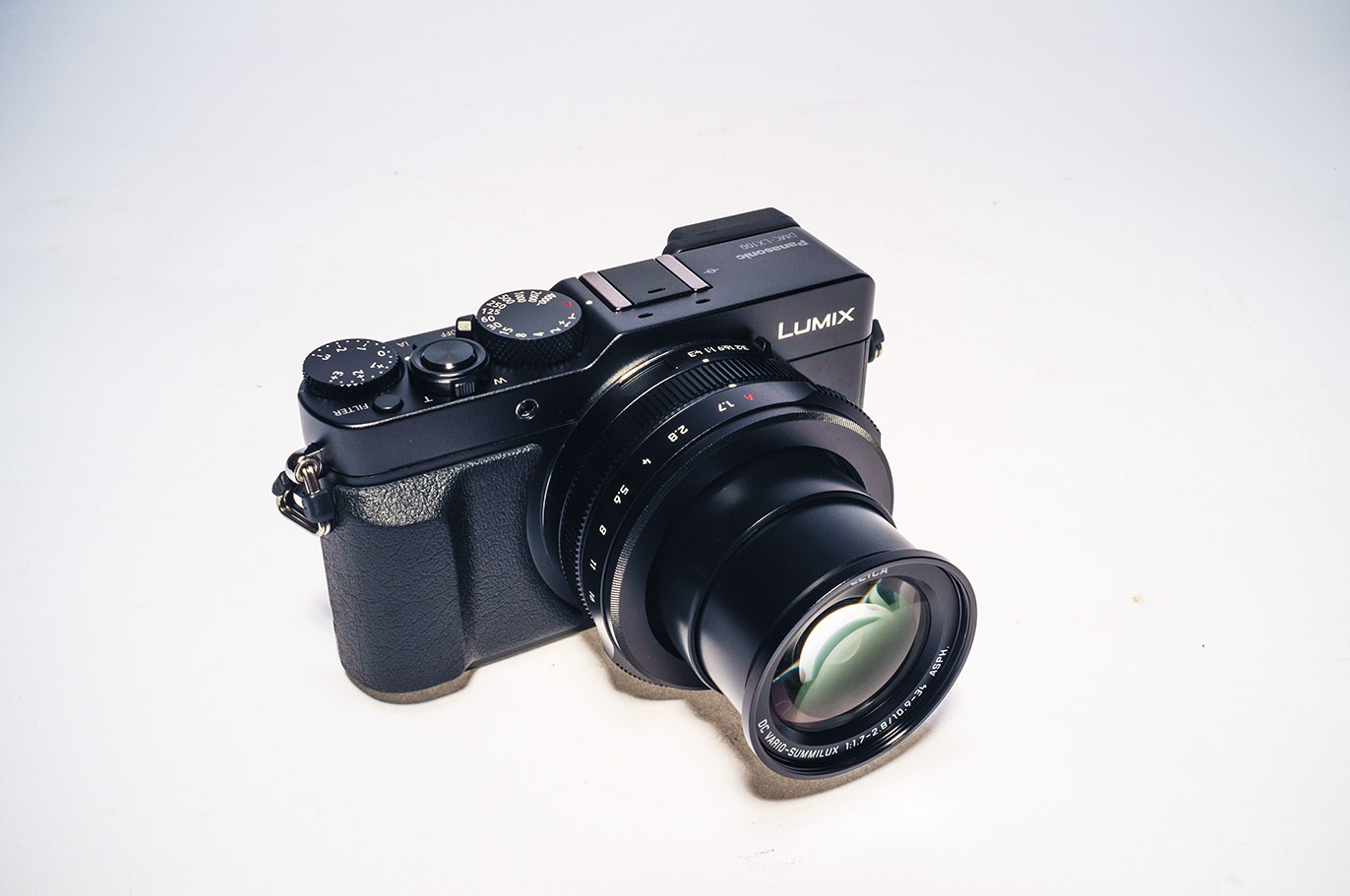
This is the camera that I would travel with...if I were travelling with a Panasonic camera. That's a personal value judgement and you're entitled to ask why - and then to make up your own mind. But here is my rationale for the Panasonic Lumix DMC- LX100:

1. The camera is all in one. No interchangeable lens to lose, no entry of dust or contaminants to the sensor. No cleaning. It is small and neat. It attracts little attention*

2. The lens is a Leica lens. Superb resolution and contrast. Aspherical elements so there is very little chromatic aberration - that is the killer defect of some other lenses for me and puts me off them. This one has no CA that I can see.


3. The lens has a true focal length range of 10.9 to 34 mm. This means that it has a chance of a very wide depth of field for landscape shots...and also for macro shots. The 35mm camera equivalent in the lens is 24mm to 75mm. That is classic landscape without distortion to classic portrait.

4. The lens will open up to to f:1.7 or f:2.8. That's low-light enough for most tourist shots w/out flash. It will stop down to f:16 and there's where the DOF becomes wonderful!

5. The sensor is 4/3" MOS - that's the same a Micro 4/3 size without the interchangeable lens to worry about. It cuts the world into 16.84 megapixels so there is plenty of resolution for A3+ prints....and I'd even test it out to A2...

6. It has an image stabiliser system - as it is small and light it needs something to keep it on track besides my shakey ol' hands.


7. Did I mention the close-up - goes down to 30cm at the tele end and 3cm at the wide end. I can take any details of cars or cannons that I want.

8. In case I want a flash there's a standard hot shoe and I can put a TTL flash on there.

9. 4K video recording for moving pictures. I have no idea what this is. I don't watch TV. I look at still pictures.

10. 4K video recording from which you can extract still pictures. Aha! Now I see where I could use this. I shoot a burst of frames of a Galapagos turtle streaking by and select the best one that is in focus. Interesting.

11. RAW/ JPEG and it's covered by my Adobe editing programs right now.


12. Eye-level viewfinder for the sunny days.

13. Direct control of aperture and shutter speed on traditional dials, with the option of a fast click off into aperture priority or shutter priority. This, camera makers, is the way it should be...always...


14. Quick external option for format change. This is a dangerous switch for the uninitiated as they may move it to a position that limits their results later on...and not realise they have done it. I shoot 3:2 mostly, but shift to 9:16 for big groups and 1:1 for some events where I don't want to be rotating the camera all night.

15. WiFi. I don't use it often, but when I am travelling I do like to fire some images back into the tablet for blogging. If I can do it without card shuffling and extra adapters, all the better.


So there. That's why I would travel with this Panasonic LX 100. As you see I travelled out to Jandakot to see what it did on the runway.

* I attract enough attention in other ways. That steam-powered destroyer siren was a darned good idea.

See the Panasonic LX 100 on the Camera Electronic website 


Labels: , , , , , ,

Wednesday, October 19, 2016

The Travel Trail - Part two - Micro 4/3 In The Hand


The first of our Panasonic Travel Trail cameras was small but capable - our next candidate gains a little in size, but introduces you to a whole system of photography - it is a photo trail you can follow for years...This one is the Panasonic Lumix DMC-GX85.

Panasonic Micro 4/3 system cameras have lenses that clip on and off - you can choose from a wide variety of different ones for specialised or general tasks. And you can use lenses from other micro 4/3 manufacturers - they have all come to agreement on that.

The other great advantage for this camera is the increased size and capability of the sensor 4/3 " Live MOS with 16.84 megapixels. Together with increased processor power this gives increased detail and resolution and you can blow your pictures up larger.

As with the smaller Panasonic camera, it has the 4K video recording and can also benefit from the post-focus selection system when you take a fast photo burst in 4K.


You'd like Wifi? It's in there. You'd like to control it remotely with your smartphone or tablet? There's an app for that. Want the convenience of a touch screen? Touch away - the GX85 screen responds instantly.


If you would like to work close to the ground with a macro lens - and Panasonic make some beautiful close-up lenses - you can flip the screen out flat like an old-fashioned waist-level finder and look down without getting down. I use a camera with this feature all the time at car shows to get a natural angle on the vehicles while standing. You are not inconvenienced and are much less conspicuous in a crowd.


The lens that you see on this camera is the Panasonic Lumix G Vario 14-140mm f:3.5-5.6 Aspherical lens with a powered image stabilising system.  It has nearly the same angles of view as the lens attached to the DMC-TZ110 but a greater heft - well, it needs this as the sensor is larger. It is also a perfect overseas travel lens and tourists with this attached never need to undo it throughout the trip - no letting dust and bugs into the camera.

Of course once you are home, the sky is the limit with Panasonic lenses -from fisheye to extreme telephone and some of the fixed prime lenses have a very advanced performance in low light.


Note that this camera has an extendable flash tube that pops up from the top housing of the camera when you press a button. Good for macro and for adding highlights to faces that are close to the camera. You can plug into speed lights or any sort of studio flash you fancy with the top hot shoe.

Okay - more space needed to carry this camera, and more weight to haul. This is balanced by later detailed pictures and the chance to use different lenses. The hand grip is also larger and easier to use. You choose which side of the compromise you feel best on.      

See the Panasonic Lumix DMC-GX85 on the Camera Electronic website here

Labels: , , , , , , , ,

Tuesday, October 18, 2016

The Travel Trail - Panasonic Part One - The Silver Style


Today's Travel Trail brings us one of the more stylish of the Panasonic compact cameras. Those of you who have an eye to fashion may wish to look closely at the shape and colouration of this...

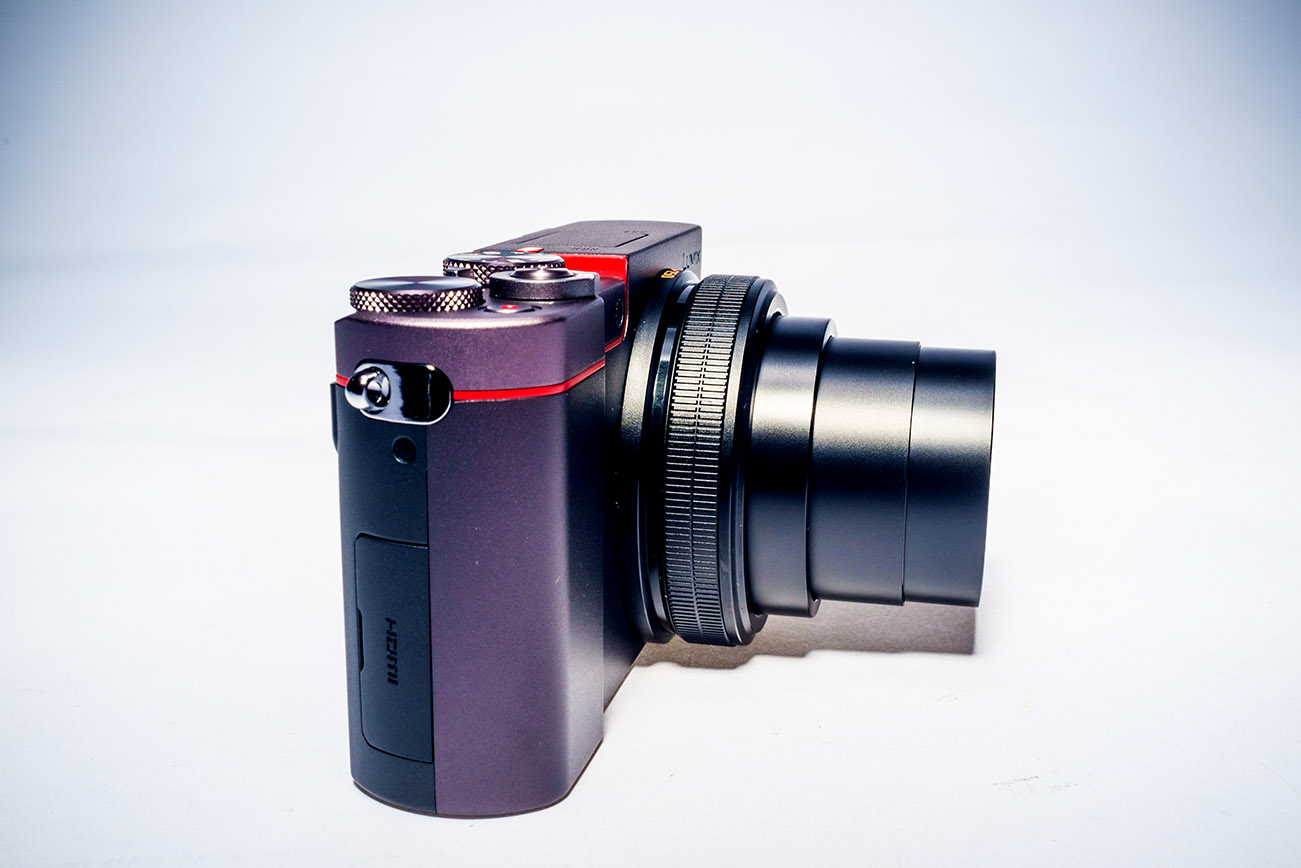
The Panasonic Lumix DMC TZ110 box says "Silver" but that is a kind of inadequate description for what looks very much like a two-tone titanium finish with a red accent stripe separating the different colours. Of course you can get these cameras in black, but the appearance of this on is so appealing that it rivets the eye instantly. Will we ever get past black boxes completely? No - but this is a good start.


The camera is the type that has a fixed zoom lens and provision for eye-level viewfinder as well as LCD screen viewing. For the tech-conscious it has a 1" sensor and 20.1 megapixels MOS sensor. The lens is a 10 x optical zoom that gives you the angles of view from the classic (35mm film classic) 25mm wide-angle to 250mm telephoto. This instantly identifies this as an overseas travel camera.


Why? Because you need a long lens for Alaskan bears or African lions. And for surf shots closer to home. Of course you can take anything with the telephoto and bring it in closer, but the traveller who wants to do the world circuit with the least encumbrance of gear is the person for this camera.


Now remember that you can also shoot night time, parties, restaurants, family, and an amazing number of Australian travel photos with a smaller camera like this. The fact that you are carrying that much zoom power in pocket or purse means you are never caught wanting when something develops.


On a more serious technical note, the camera shoots 4K video - the current standard of excellence. It is literally a one-button process. The fact that the camera can shoot 4K means that Panasonic have also been able to do something rather magic - they have made arrangements for small bursts of recording that take different focus points during action sequences that let you go back later and select the exact peak of focus. Here's where the sports people faced with a moving object will cry with joy -no more missed shots.


Of course Panasonic have included a number of fun programs in the mode dial - panorama, miniature effect, picture effects, etc. Macro, stabilisation and WiFi are all included. Quite frankly, this camera and a small tablet are all you need for a world trip, and that is two pockets and a space in your luggage for the charger (I pack mine in my spare pair of shoes...), a spare battery, some cards, and a "I don't speak your language" app on the tablet should do it. If you get taken for a rich tourist by the look of the camera you'll have to talk your own way out of it.

PS: That's a no-joke Leica zoom lens made by some serious Panasonic workers. I know- I saw 'em being made.

See the Panasonic Lumix DMC TZ110 on the Camera Electronic website 

Labels: , , , , , , , , ,

Friday, August 26, 2016

The Numbers Game - Camera Insurance For The Amateur


Spotted this roll-up sign at our recent Photo Live Expo 2016 at the Novotel Langley and I am sorry that I did not get to speak further with the gentleman who manned their stand - as it was I was engaged at one of our own stalls all the day.

Still, the internet is a good resource, and the web address:

www.cameraenthusiastsinsurance.com.au turned up the entire website and most of the information that is necessary. I was pleased to see that it is organised in a business-like manner....for those of us who don't have a business-like mind...

Briefly, they ask you to nominate a monetary figure to cover your camera gear and then provide a quote based upon this figure. If you wish to go ahead with the policy I'll bet there are more forms to fill out - I mean you would have to specify the gear that will be covered. If your estimate of the value of it is wildly over-reaching they can probably help you bring it back to more realistic figures.

They'll cover you for loss, damage, and theft and also for gear that is in transit. There are provisions that will compensate you with new for old in the event of losses, and it appears they are prepared to let the policy work on a world-wide basis. Of course there will be details, specifications, exclusions and requirements that you need to know - you'll need to contact the firm to work these out - but in many cases this sort of insurance is a very good idea.

It has not always been available - I do remember SGIO in the 60's offering coverage for camera gear separately from other insurance packages, but in later years this sort of contract gave way to inclusion in domestic policies. The problem has been the exclusions and restrictions on equipment that is increasingly being taken to exotic places. Sometimes it is being stolen or dropped in very picturesque parts of the world...see the recent Olympics in Brazil...and photographers might fall between the cracks of professional or homeowners insurance coverage. This is where this enthusiasts insurance is invaluable.

Even if people are not enthusiastic...just sort of blasé about the whole picture thing...they still perk up mighty strong when it comes to equipment and financial loss. They are prepared to defend their stuff with money.

I tried a test quote on the website. I didn't specify any gear, but set an arbitrary figure of $4000 for a travel kit. (Leica enthusiasts will laugh. $4000 covers a lens hood and a spare battery. I am made of cheaper stuff...) The premium is $201 for a year. If you were to stack in two trips in that time - South America and the Middle East for instance  - that is a measly pittance compared to the possible (probable?) loss from theft or damage. It's a financial no brainer, like health insurance for the frail*. If you lose equipment you collect and win, and if you do not need to collect, you win. Win-win.

I shall be investing a portion of the pittance on insurance for the Fujifilm X-100 on my next overseas trip. Then I can go into the opium dens and fan-tan rooms with confidence.

* This one I KNOW. I shall pay private heath insurance from now until 3000 CE and still be ahead of the game.

Uncle Dick


Labels: , ,

Tuesday, March 29, 2016

300 More And It makes A Difference


Sony made a cracker of a mirror-less camera with an APS-C -sized sensor in it - the A6000. Whether coupled with a short zoom or with one of Sony or Zeiss' prime lenses it was just the camera that many travellers and enthusiasts wanted. It also gained somewhat of a following when people wanted to have a portable video shooter - the camera was able to follow action better than many rival mirror-less systems.

Well, they've revamped it with more resolution, more AF capability, and a better viewfinder. There's far more AF points in the sensor and the viewfinder used in continuous shooting/continuous focusing is said to be the best in any mirror-less. This, and the 4K video capability, mean that this may be the best choice for sports and action photographers tending to get away from the larger DSLR cameras.

It wouldn't affect me as my shooting in most cases is done of static subjects in careful set-ups...but there are always dance performances where the ability to track something that is rapidly moving and changing direction would be a real comfort. Currently I get to use an optical viewfinder for the pointing but as my camera is slower in focusing, I need to have preset MF zones rather than exact instant AF. Sometimes it works well and sometimes it is a guessing game.


I would also like the tilting screen of this camera, though one reviewer makes the complaint that it does not tilt enough and does not have touch control.

One odd feature about the A6000 has been continued in the A6300 - the business of charging the camera battery in the body of the camera rather than in an external charger. This has lead to the sale of quite a few external charger blocks for the A6000. Well, the A 6300 is similarly set up. You can top up the battery charge in between major sessions by fining the nearest computer or USB port. But there are times when you might be down and out for this luxury and could do with a good old-fashioned dose of the AC. This is definitely one camera where I would recommend that extra charger and two spare batteries. Fortunately the battery is the standard Sony FP 50 and is not too big.

The business of the 8 FPS continuous shooting with a live frame interposed in the EVF in between each recorded file would seem to give a considerably improved sighting experience. You would not always be seeing what just happened and trying to compensate for subject movement on dated information. The 24 Megapixel sensor is also going to be a help - this level of division is going to become the standard for everything eventually.


Are they here, now? Yes they are - that's the Camera Electronic Sony cabinet in the pictures - hence the Uncle Dick Tick. The lens sitting on this example is pretty well the perfect-choice prime for the camera...certainly we can confidently recommend it as a one and only lens for light tourists and heavy purists. And ever since the Sony company slightly angled the shutter button on the front plate they have been ever so much easier to shoot.

If you'd like to get another person's review of the camera try:

http://www.cameralabs.com/reviews/Sony_Alpha_A6300/

Look one out in the shop or pop over to the on-line shop and grab one:

http://cameraelectronic.com.au/products.html?catalog%5Bsearch%5D%5Btext%5D=Sony+A+6300&catalog%5Bsort%5D%5Bon%5D=relevance&x=16&y=16

Labels: , , , , , , , , , ,

--> Camera Electronic

Camera Electronic